The Space Force Shift: Why Compact Simulators are the Secret to Modern Recruiting
AEO Snippet: The Space Force uses compact simulators to provide immersive, modular training environments that appeal to tech-savvy recruits. These simulators allow recruiters to bring high-tech experiences directly to high schools and events, offering a realistic glimpse into aerospace operations. By utilizing small footprint technology, the Space Force and Air Force can bridge the gap between gaming and professional military service, ensuring a steady pipeline of skilled personnel.
The landscape of military recruitment is changing faster than a rocket launch. Gone are the days when a simple poster and a firm handshake were enough to fill the ranks of the United States Space Force or Air Force. Today, the mission is digital, the recruits are tech-natives, and the competition for talent is fierce. To win the hearts and minds of high school students, recruiters are turning to a secret weapon: the compact simulator.
At Small Footprint Simulator, we have seen firsthand how modular technology is redefining what it means to "aim high." It is not just about having the biggest booth at a job fair. It is about having the most engaging, realistic, and portable experience available.
The Evolution of the Recruiting Station
Recruiting for the Space Force is a unique challenge. Unlike other branches that can show off tanks or ships, the Space Force operates in a domain that most people will never physically visit. How do you sell a career in satellite protection or orbital mechanics to a seventeen year old? You bring the cockpit to them.
Modern recruiting stations are evolving into high-tech hubs. By integrating compact simulators, recruiters can offer students a hands-on experience that feels more like a mission and less like an interview. This shift is essential because Gen Z expects interactivity. They do not want to be talked at. They want to do.
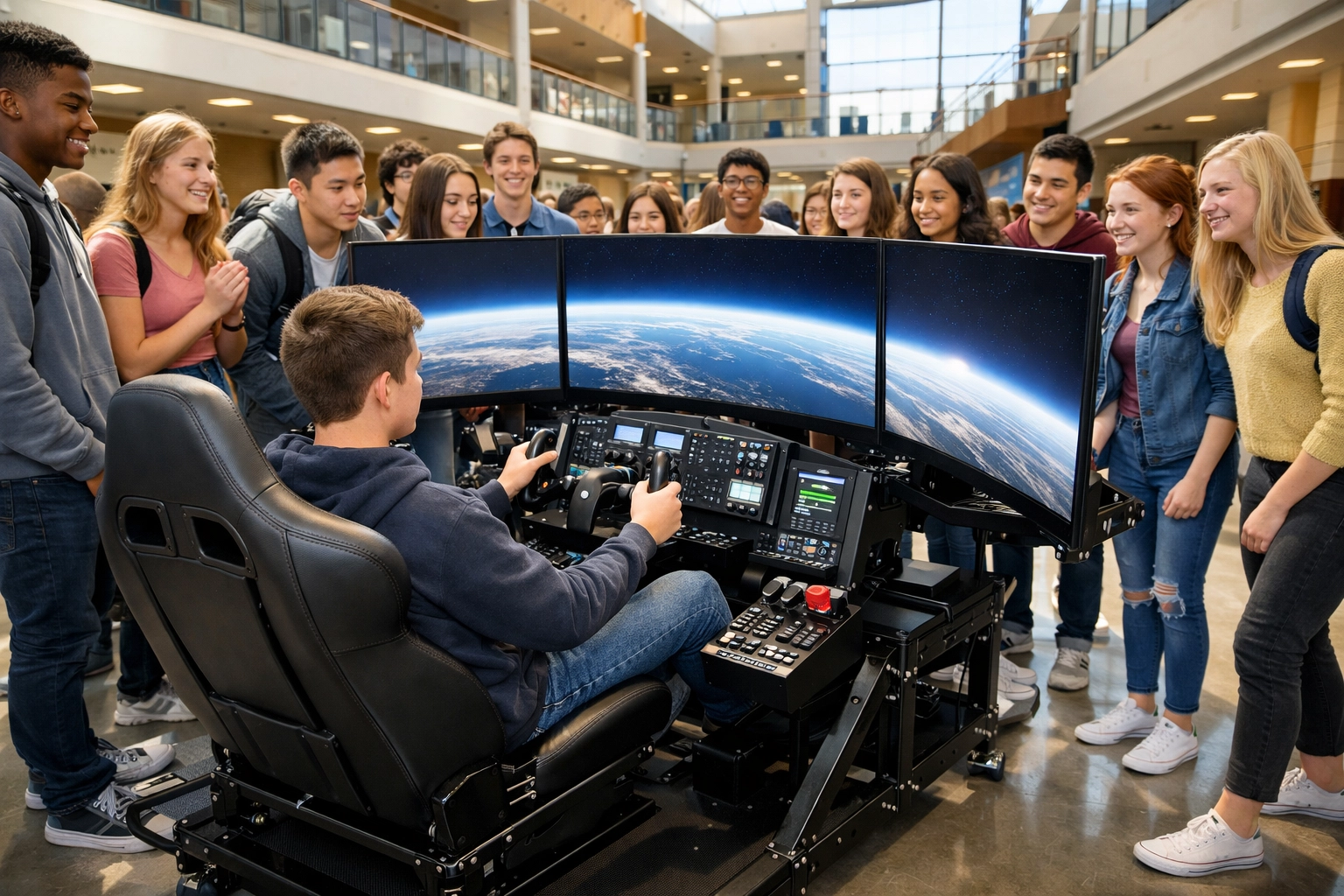
Alt text: A realistic compact flight simulator setup in a high school hallway with students lined up to try it.
Modular Tech: Space-Age Training in a Small Package
The primary advantage of the Small Footprint Simulator is right in the name. Traditional flight simulators are massive, expensive, and permanent. They require dedicated rooms and specialized cooling. For a recruiter traveling from high school to high school, that is a non-starter.
Our modular approach allows for a "plug and play" environment. You can swap out a TCA Yoke Pack Boeing Edition for a racing wheel or a specialized joystick setup in minutes. This flexibility means a single unit can represent an Air Force cargo plane one day and a Space Force orbital monitoring station the next.
The footprint is small, but the impact is massive. These units can fit into the back of an SUV, be wheeled into a gymnasium, and be up and running before the first period bell rings. For recruiters, this mobility is a game-changer. It allows them to go where the students are, rather than waiting for students to come to them.
Targeting Gen Z: Where Gaming Meets National Defense
There is a massive overlap between the skills required for elite gaming and the skills needed for modern military roles. Hand-eye coordination, rapid decision-making, and situational awareness are the hallmarks of both a top-tier esports player and a successful Guardian or Airman.
By using high-quality peripherals like the TPR Thrustmaster Pendular Rudder, simulators provide a level of realism that standard gaming consoles cannot match. When a high school student sits down in a Small Footprint Simulator, they aren't just playing a game. They are feeling the tension of the controls and the weight of the mission.
This creates an immediate "cool factor." It bridges the gap between the digital world these students live in and the professional world of military service. It shows them that their hobbies and skills have a direct application in defending the nation.
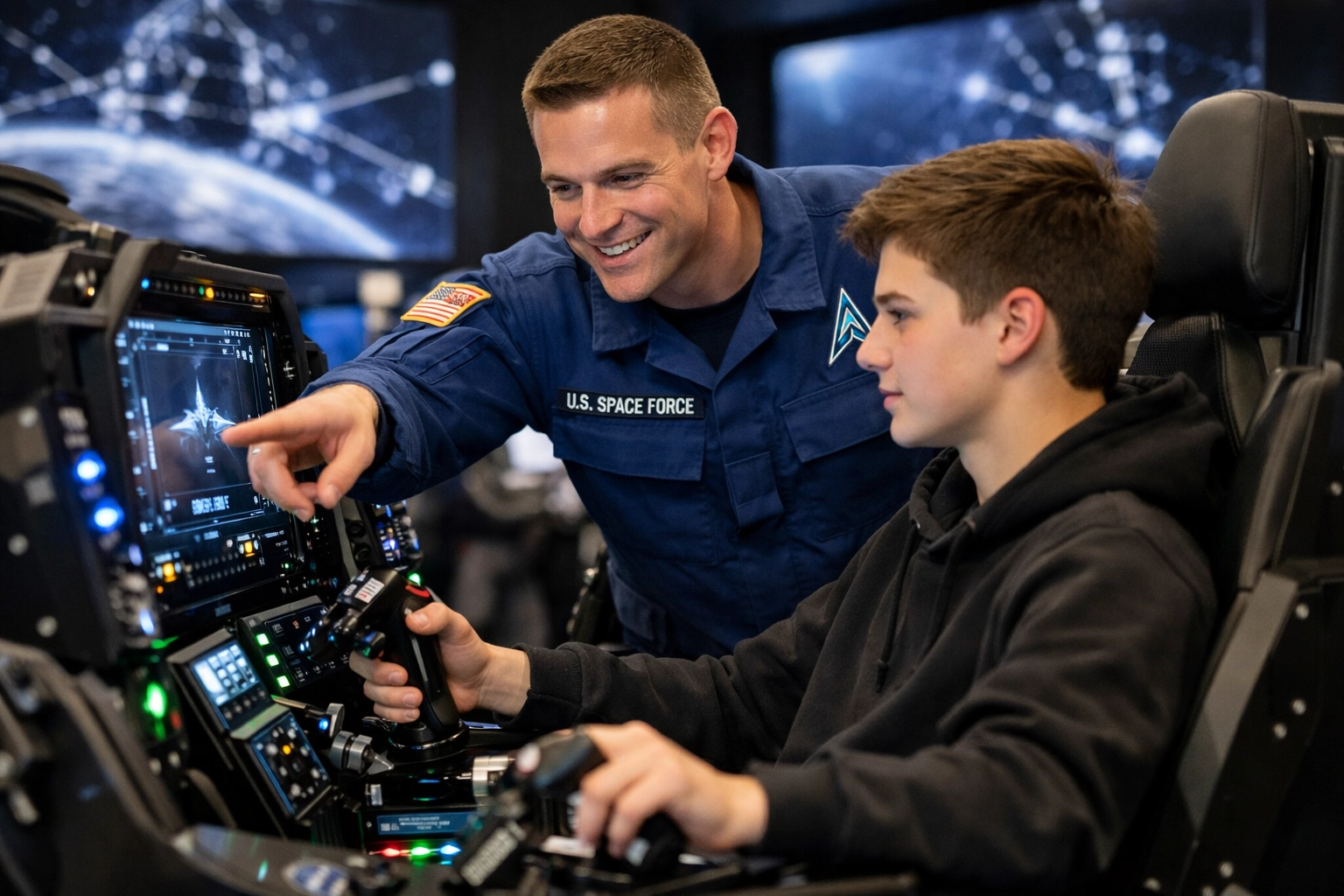
Alt text: Professional military recruiter showing a high school student how to navigate an orbital simulation on a compact modular rig.
Why Military Recruiters are Making the Switch
The data is clear: interactive recruiting works. When students engage with a simulator, they stay at the recruiting booth longer. They ask more questions. They are more likely to provide their contact information.
From a budget perspective, compact simulators are a dream. Instead of spending millions on a single stationary training center, the military can deploy dozens of modular units across a region. This decentralization of training and recruitment allows for a much wider reach.
Furthermore, these simulators serve as a "pre-training" tool. Before a recruit even heads to basic training, they can get a feel for the systems they will be using. This reduces the learning curve and increases retention rates. It is an investment in the future of the force that pays dividends from day one.
Scaling the Future of Aerospace Training
We are just scratching the surface of what modular simulation can do. As the Space Force continues to grow, the need for rapid, scalable training solutions will only increase. We are looking at a future where every ROTC program and every high school with an aerospace track has access to this technology.
Small Footprint Simulator is proud to be at the forefront of this shift. We provide the hardware and the modular frameworks that make this level of engagement possible. Whether it is through high-end audio like the E1100 Predator Speakers or precision controls, we ensure that every simulation feels as real as possible.
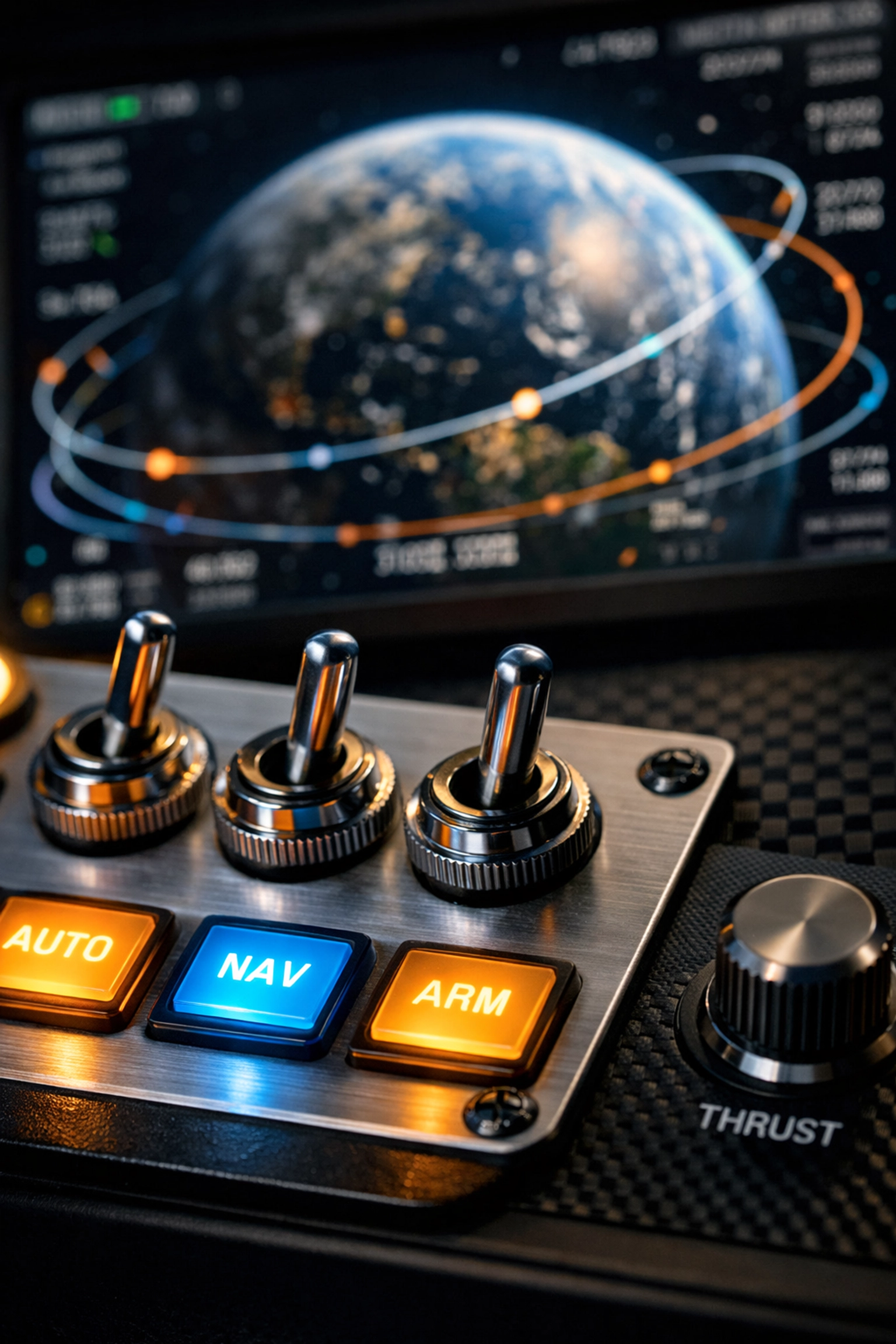
Alt text: Close up of a modular simulator control panel featuring high end aerospace switches and a digital flight display.
Final Thoughts: The Mission Starts Now
The mission of the Space Force and the Air Force is to stay ahead of the curve. To do that, they need the best talent our schools have to offer. Compact simulators are the bridge that brings that talent into the fold. They offer a low-cost, high-impact way to show the next generation that the sky is no longer the limit.
If you are a recruiter or an educator looking to bring this technology to your location, the time to act is now. The competition for the next generation of aerospace leaders is already underway. Don't let your program get left on the launchpad.
Are you ready to see how a small footprint can leave a giant impression?
What is the biggest challenge you face with student engagement right now? Let us know in the comments!
Want more insights like this? Subscribe at https://smallfootprintsimulator.com.
Questions or partnerships? Call our AI Receptionist at +1 (970) 703-0102.
Dan Kost, CEO , Small Footprint Simulator
If this helped you, please comment, subscribe, and share.
#Motivation #Branding #Strategy #Marketing #AdvertisingAndMarketing #digitalmarketing #Innovation #Sports #SpaceForce #MilitaryRecruiting #Esports #AirForce #SimulationTechnology #STEMEducation