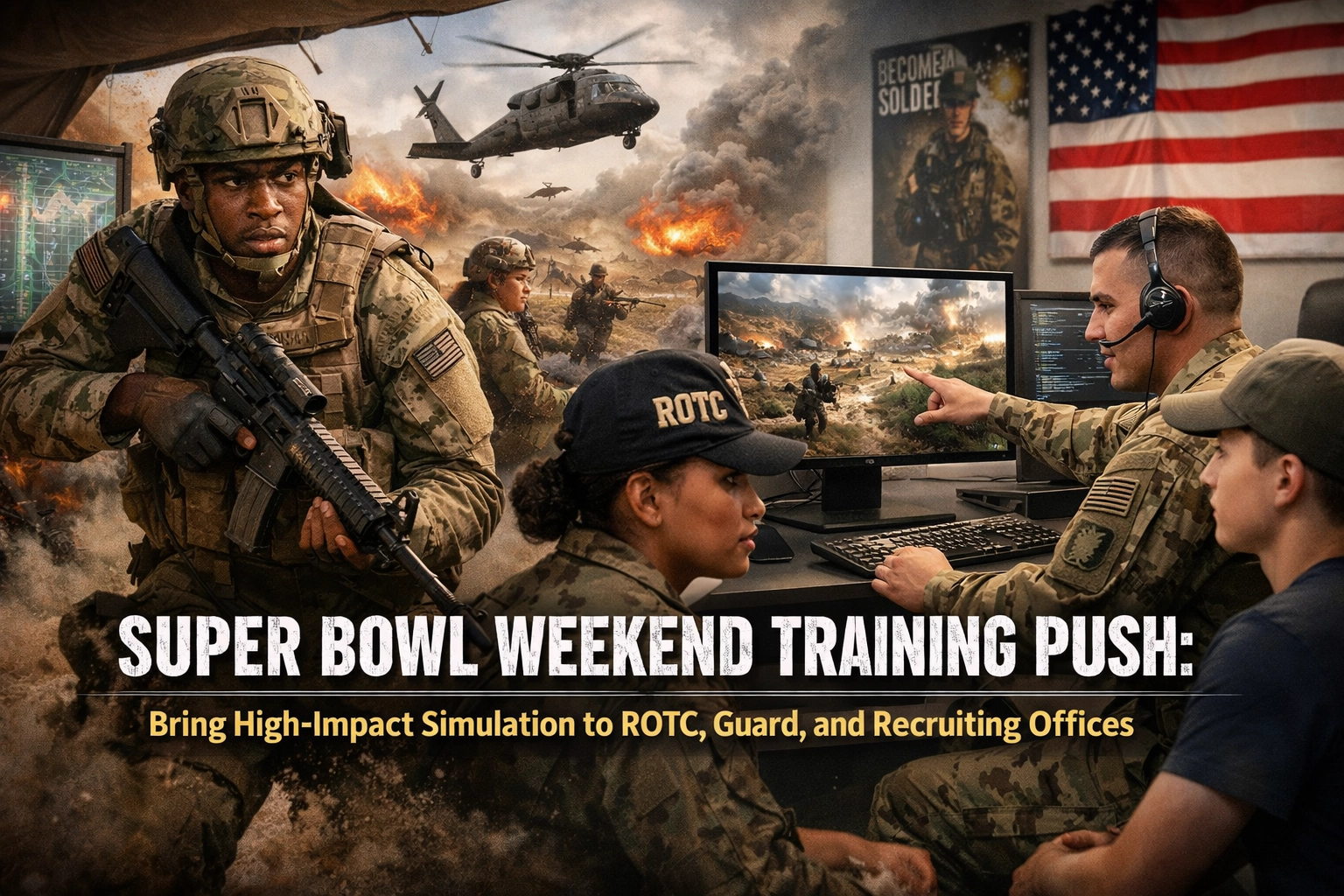
Super Bowl Weekend Training Push: Bring High-Impact Simulation to ROTC, Guard, and Recruiting Offices
Super Bowl weekend brings millions of eyes to screens across America. While fans watch incredible displays of precision, teamwork, and split-second decision making, military recruiters and training officers face a different challenge: how do you deliver world-class training experiences in spaces that were never designed for full-scale simulators?
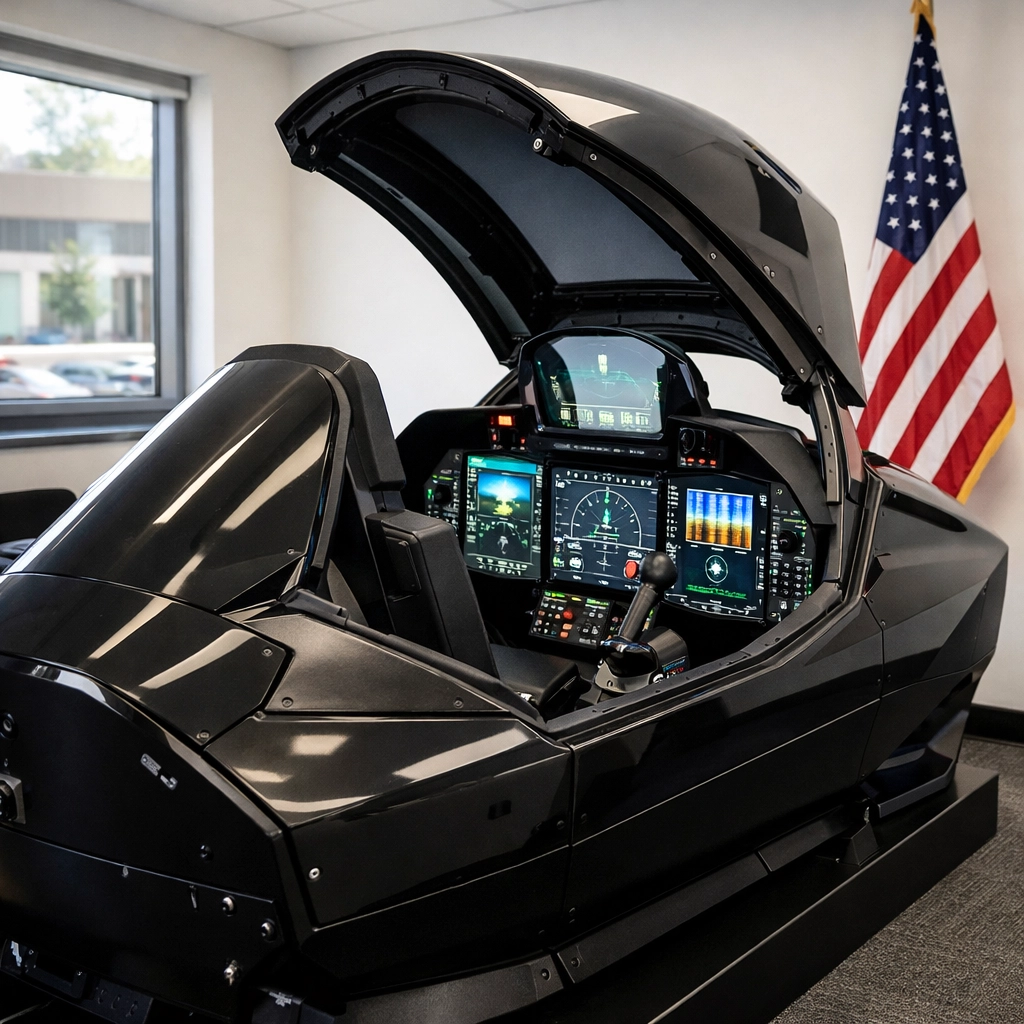
The answer is compact, high-impact simulation technology that fits where traditional trainers cannot. Small Footprint Simulator brings professional-grade flight simulation and training modules to ROTC programs, National Guard armories, Air Force and Space Force recruiting commands, and flight schools without requiring aircraft hangar-sized facilities or million-dollar construction budgets.
Why Super Bowl Weekend Matters for Military Recruiting
Super Bowl LX in 2026 represents more than just America's biggest sporting event. It's a cultural moment when excellence, preparation, and performance take center stage. For military recruiting offices and training commands, this weekend offers a unique opportunity to connect high-performance messaging with tangible training solutions.
Young recruits see the precision of military flyovers. Families visit recruiting centers during Super Bowl events. ROTC cadets return to campus after watching professionals execute complex plays under pressure. The question becomes: are your training facilities ready to match that level of inspiration with real capability?
Traditional flight simulators require 1,500 to 3,000 square feet of dedicated space, specialized electrical infrastructure, and installation timelines measured in months. Most recruiting offices operate out of 800-square-foot storefronts. Guard armories share space with dozens of competing priorities. University ROTC programs occupy borrowed classrooms and aging facilities.
Small footprint simulation solves this problem by delivering full-capability training in under 500 square feet. Modular pod systems install in days, not months. Power requirements match standard office electrical systems. The result: high-fidelity flight training, VR mission scenarios, and cross-platform simulation that fits in the spaces you already have.
Watch How Compact Simulation Changes Training Access
See exactly how small footprint simulator technology transforms limited space into a complete training environment. This demonstration shows the installation, capability, and training applications that make high-impact simulation accessible to facilities that previously couldn't accommodate traditional trainers.
Watch the full demonstration: https://www.youtube.com/watch?v=l6J-0zileKE
ROTC Programs: Bring Flight Training to Campus
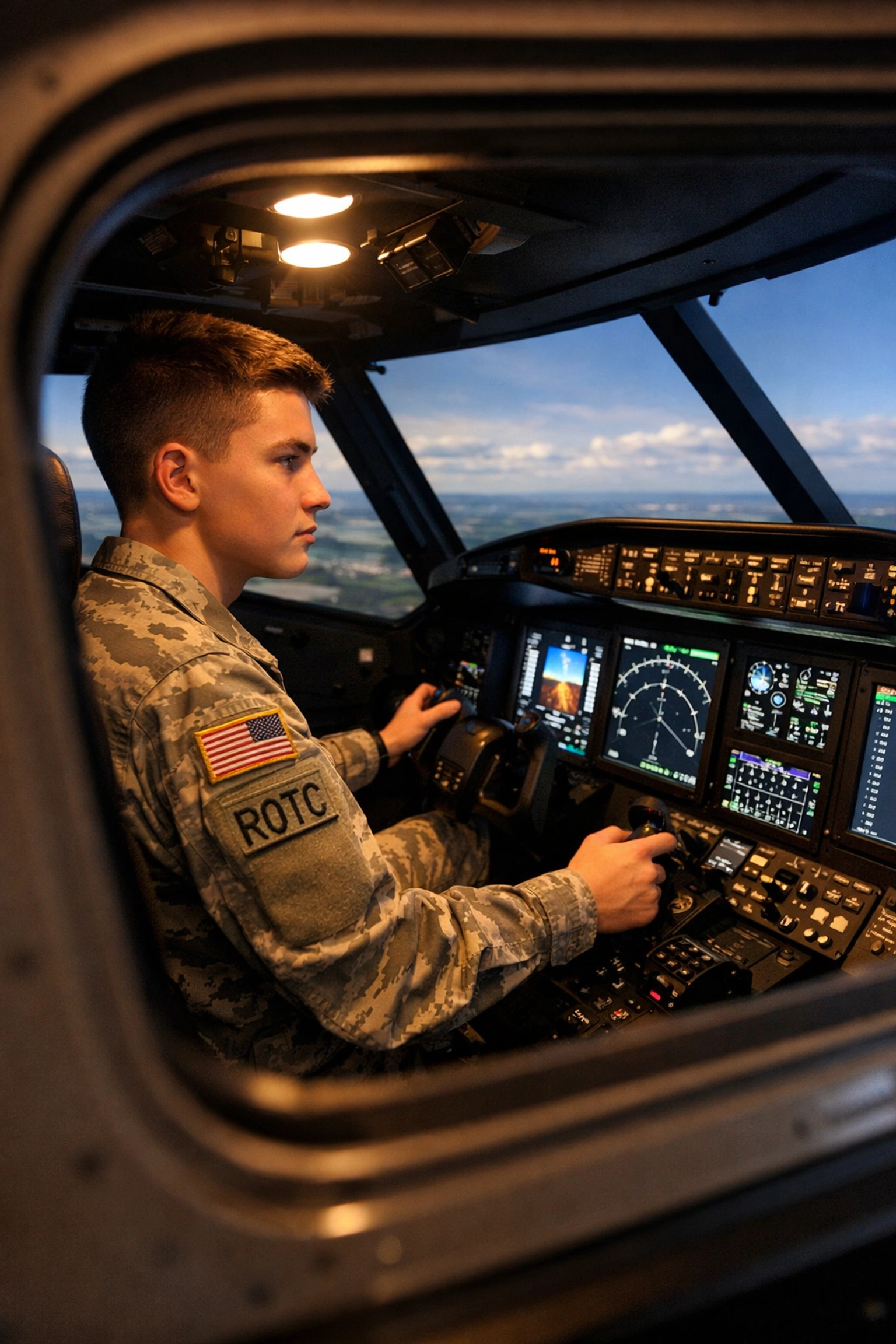
Reserve Officer Training Corps programs compete for limited campus real estate. Traditional flight simulation labs require dedicated buildings, specialized construction, and maintenance budgets that exceed most program allocations. Many ROTC detachments send cadets to off-site facilities or rely on outdated desktop trainers that fail to deliver realistic cockpit experience.
Compact simulation pods change this equation. A complete training station occupies less floor space than three office cubicles. Universities install pods in existing ROTC buildings, student centers, or repurposed classrooms. Cadets access professional-grade flight simulation without traveling to distant air bases or waiting months for limited trainer availability.
The training quality matches or exceeds traditional simulators. Full cockpit configurations, realistic flight dynamics, mission scenario libraries, and performance tracking systems deliver the same capability as full-motion trainers. The difference: installation costs drop by 60 to 80 percent, and the physical footprint fits where campus facilities actually exist.
ROTC detachment commanders report training hour increases of 200 to 400 percent after installing compact simulators. When training access improves, cadet proficiency follows. More flight hours, more scenario repetitions, and more hands-on experience translate directly to better-prepared officers entering active duty.
National Guard Armories: Maximize Limited Training Space
National Guard facilities serve multiple units, host community events, and provide emergency response staging areas. Training space gets scheduled months in advance. Traditional flight simulators require permanent installations that consume space needed for other critical functions.
Small footprint simulators solve this with true modularity. Training pods deploy in multi-use spaces, break down for storage when needed, and reconnect in minutes for training sessions. Guard units gain flight simulation capability without sacrificing armory flexibility or displacing other equipment.
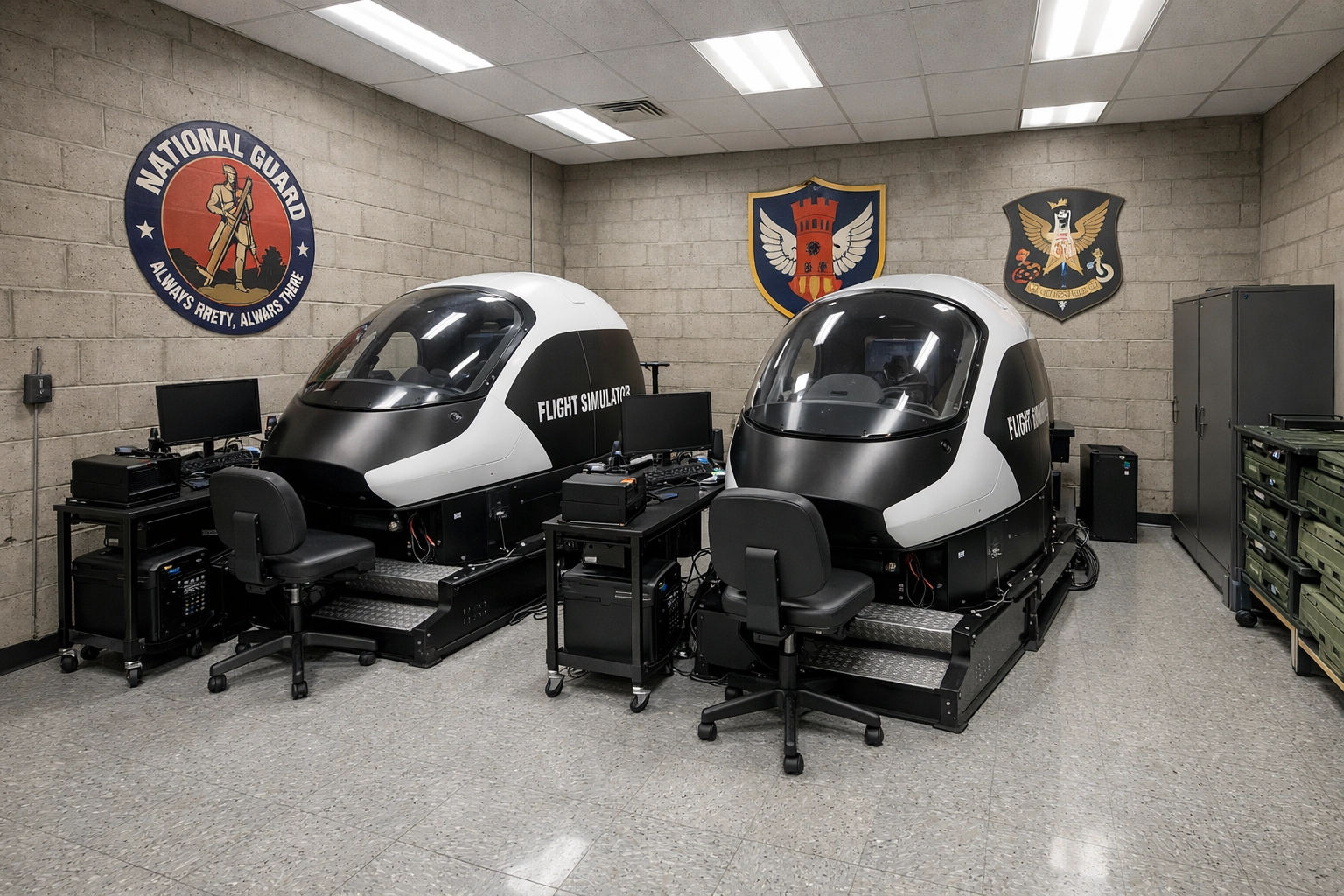
Weekend drill schedules demand maximum training throughput. Compact pods allow multiple simultaneous training stations in the same space that previously accommodated one traditional simulator. More guardsmen train per drill weekend. Proficiency metrics improve. Readiness scores increase.
Budget-constrained Guard units particularly benefit from the cost structure. Lower acquisition costs, reduced installation expenses, minimal facility modification requirements, and simplified maintenance protocols mean simulation capability becomes accessible to units that previously could not justify traditional trainer investments.
Air Force and Space Force Recruiting Commands: Bring the Mission to Storefronts
Recruiting offices operate in strip malls, downtown storefronts, and shared commercial spaces. Square footage ranges from 600 to 1,200 feet, most of which must remain open for walk-in traffic, administrative functions, and recruiter workstations. Traditional simulators simply do not fit.
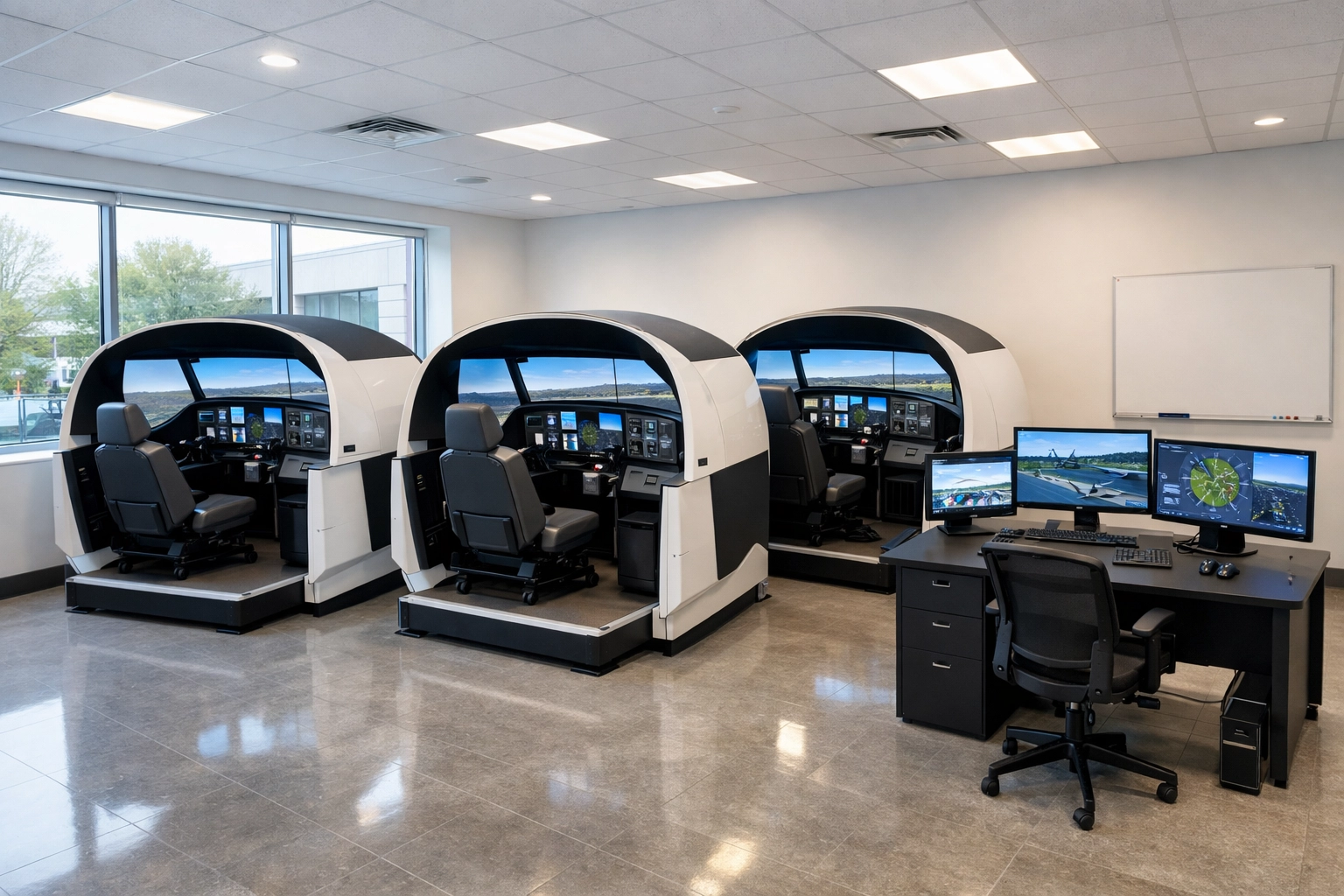
Compact simulation transforms recruiting environments. A professional flight simulator pod installs in the corner of a standard recruiting office. Prospects walk in, see actual training technology, and experience hands-on flight simulation during the same visit. The demonstration becomes the conversation.
Recruiting metrics improve when prospects interact with real capability rather than watching promotional videos. Touch the controls. Fly the mission. Feel the training environment. This hands-on experience converts interest into commitment more effectively than any brochure or website.
Space Force recruiting particularly benefits from simulation technology that demonstrates spacecraft operations, satellite systems, and mission scenarios that most civilians never encounter. The training pod becomes a physical representation of the mission, making abstract concepts tangible and career paths concrete.
Flight Schools: Expand Capacity Without Expanding Facilities
Part 141 and Part 61 flight schools face constant tension between student demand and facility capacity. Traditional simulators require dedicated simulator bays, which means expensive building expansions or leasing additional space. Growth becomes a real estate problem rather than a training challenge.
Small footprint simulators break this constraint. Flight schools install additional training capacity in existing buildings. Break rooms, storage areas, and underutilized office space convert to simulator stations. Schools add training capability without construction projects, zoning approvals, or lease negotiations.
The economic model shifts dramatically. Traditional simulator installations cost $150,000 to $400,000 before facility modifications. Compact pods deliver comparable training capability at 40 to 60 percent of traditional costs, with installation timelines measured in days rather than quarters.
Student throughput increases immediately. More simulator hours mean faster progression through ground training, more efficient use of actual flight time, and higher pass rates on checkrides. Flight schools report 25 to 40 percent increases in annual student capacity after deploying compact simulation without adding building square footage.
Technical Capability in Minimal Space
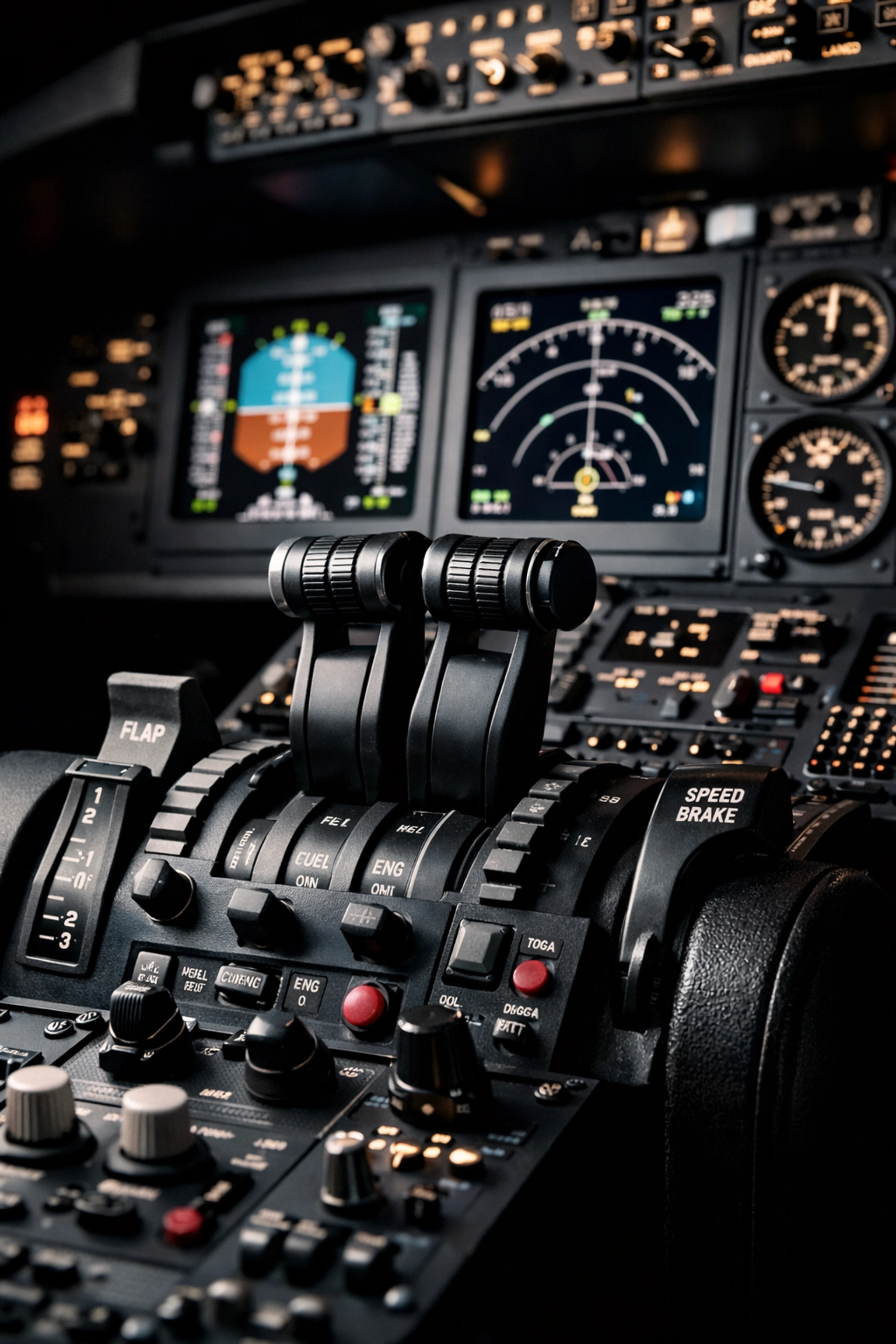
Small footprint simulators deliver full-capability training in compact installations. Modern pod systems include complete cockpit configurations matching military and civilian aircraft types, high-resolution visual displays providing realistic external views, force feedback controls replicating actual flight dynamics, and integrated mission scenarios covering basic flight through advanced tactical operations.
Training software supports individual skill development, multi-aircraft mission coordination, emergency procedure practice, and performance assessment with detailed analytics. Instructors monitor student progress in real time, replay training sessions for debriefing, and customize scenarios to target specific skill development areas.
Hardware reliability matches or exceeds traditional trainers. Solid-state components, minimal moving parts, and modern electronics reduce maintenance requirements and improve uptime. Most facilities report 95+ percent availability rates, significantly better than older full-motion simulators with complex hydraulic systems and mechanical components.
Network connectivity enables remote instruction, shared training scenarios across multiple locations, and software updates deployed instantly to entire fleets. A training officer in Colorado can monitor cadet performance at detachments across three states. Software improvements developed at one facility deploy to all units simultaneously.
Implementation Timeline: Weeks Not Months
Traditional simulator acquisition follows procurement timelines measured in quarters or years. Facility assessment, design approval, construction bidding, site preparation, equipment shipping, installation, testing, and certification stretch across six to eighteen months.
Compact simulation compresses this timeline dramatically. Initial consultation and site assessment complete in one week. Pod configuration and customization require two to three weeks. Shipping and delivery take one to two weeks. On-site installation and testing finish in three to five days. Total timeline from order to operational training: six to eight weeks.
This speed matters for recruiting commands facing immediate mission requirements, ROTC programs working within academic calendars, Guard units preparing for deployment cycles, and flight schools managing seasonal student demand. Faster implementation means training capability arrives when needed rather than after requirements have changed.
Cost Structure: Accessible Capability
Budget reality drives training decisions. Traditional simulators require capital investments of $200,000 to $500,000 plus facility modification costs often exceeding the equipment price. Total project costs regularly reach $750,000 to $1.2 million for a single training station.
Small footprint simulators deliver comparable training capability at total project costs of $120,000 to $350,000 including equipment, installation, and facility preparation. Most installations require minimal electrical upgrades and zero structural modifications. The cost differential opens simulation training to organizations that previously classified full-capability trainers as financially impossible.
Operational costs remain low. Power consumption matches commercial office equipment. Maintenance requirements involve software updates and routine component replacement rather than specialized hydraulic system service or motion platform recalibration. Total cost of ownership over five years runs 50 to 70 percent below traditional simulator expenses.
The Super Bowl Weekend Call to Action
Super Bowl weekend celebrates excellence, preparation, and performance under pressure. Military training demands the same standards. Compact simulation technology ensures your recruiting offices, ROTC programs, Guard units, and flight schools deliver world-class training capability regardless of facility size or budget constraints.
This weekend represents a perfect moment to evaluate training capacity, assess facility limitations, and explore solutions that expand capability without expanding square footage. Small Footprint Simulator provides the technology, implementation expertise, and ongoing support that transforms limited spaces into complete training environments.
Watch the demonstration video to see exactly how compact simulation works in real facilities: https://www.youtube.com/watch?v=l6J-0zileKE
What's the biggest space or budget constraint limiting your training program right now? Share your challenge in the comments and let's explore solutions.
Want more insights like this? Subscribe at www.smallfootprintsimulator.com.
Questions or partnerships? Call our AI Receptionist at +1 (970) 703-0102.
Dan Kost, CEO – Small Footprint Simulator
If this helped you, please comment, subscribe, and share.
Share this post:
LinkedIn | Facebook | X | Instagram
Tags: #Motivation #Branding #Strategy #Marketing #AdvertisingAndMarketing #digitalmarketing #Innovation #Sports #MilitaryTraining #FlightSimulation #ROTCPrograms #NationalGuard #RecruitingTechnology