National Guard Training Secrets Revealed: What Defense Contractors Don't Want You to Know About Hybrid Simulators
The National Guard's approach to hybrid simulation training represents a paradigm shift in military readiness that's creating order-of-magnitude improvements in training effectiveness. While defense contractors navigate complex relationships with the Department of Defense, innovative simulation technologies are transforming how reserve components prepare for modern warfare scenarios, compressing traditional training timelines from weeks into days.
The Revolution in Simulation-Based Training Strategy
The National Guard has developed an intensive simulation-based training readiness strategy that achieves dramatic efficiency gains. This approach transforms one week of pre-mobilization summer training into a single weekend, or reduces 60 days of post-mobilization training to just 15-30 days.
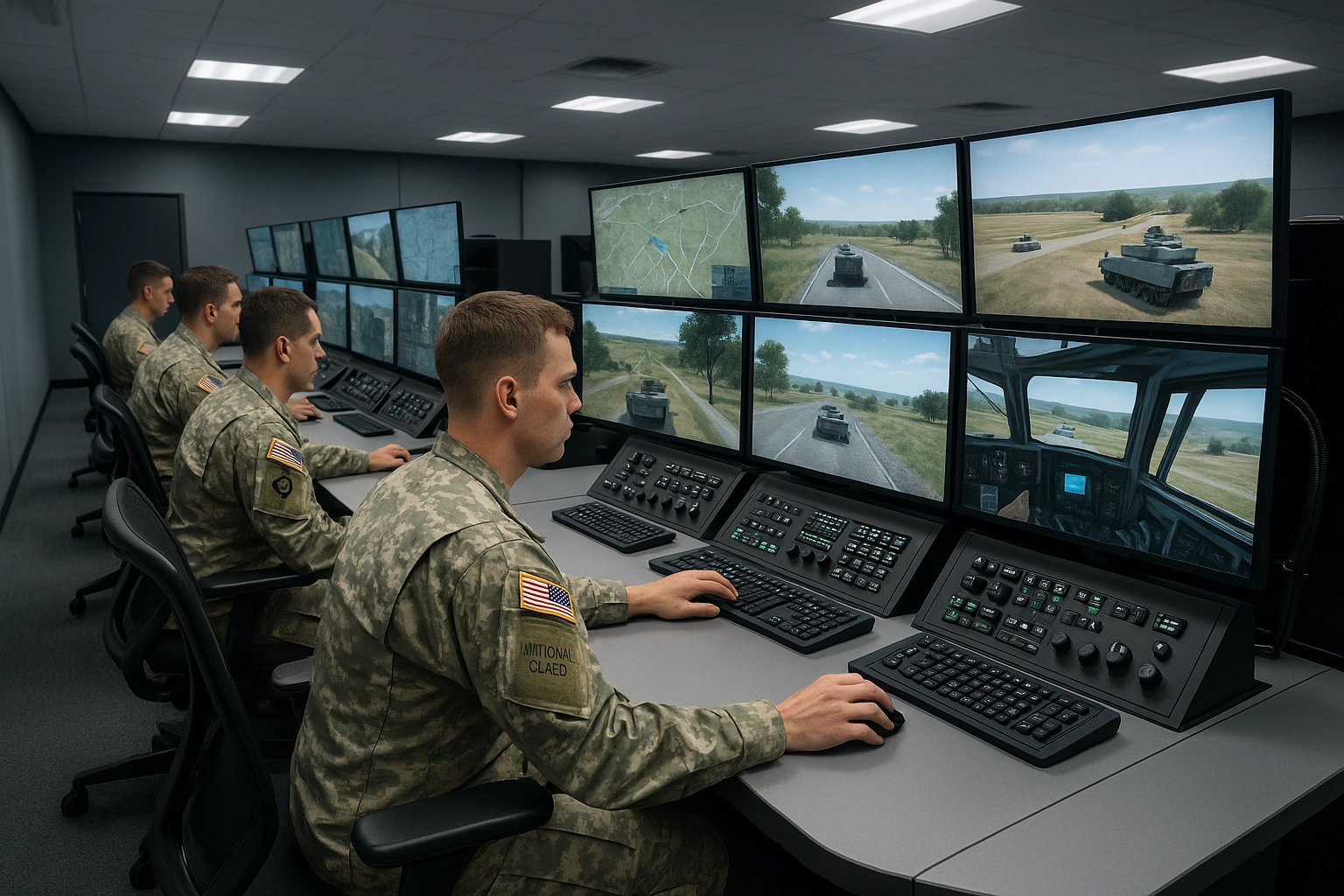
The strategy centers on four critical leverage areas: Compression, Distribution, Modernization, and Prioritization. These elements work synergistically to maximize the most precious resource for reserve forces, time. Unlike active-duty units with continuous availability, National Guard personnel typically have severely limited training windows.
This compression doesn't sacrifice quality for speed. Instead, it leverages advanced simulation technologies to create hyper-realistic training environments that deliver equivalent or superior learning outcomes in dramatically reduced timeframes.
Human-Machine Integrated Formations: The Future is Now
One of the most innovative aspects of current National Guard training involves human-machine integrated formations that seamlessly combine personnel with advanced technological systems. This isn't theoretical, it's happening right now with measurable results.
Leadership demands practical demonstrations over PowerPoint presentations. The proof of concept for human-machine integration moved from concept to battalion-level live-fire exercises at the National Training Center in less than a year. This rapid implementation demonstrates that existing technology can be deployed quickly when bureaucratic obstacles are removed.
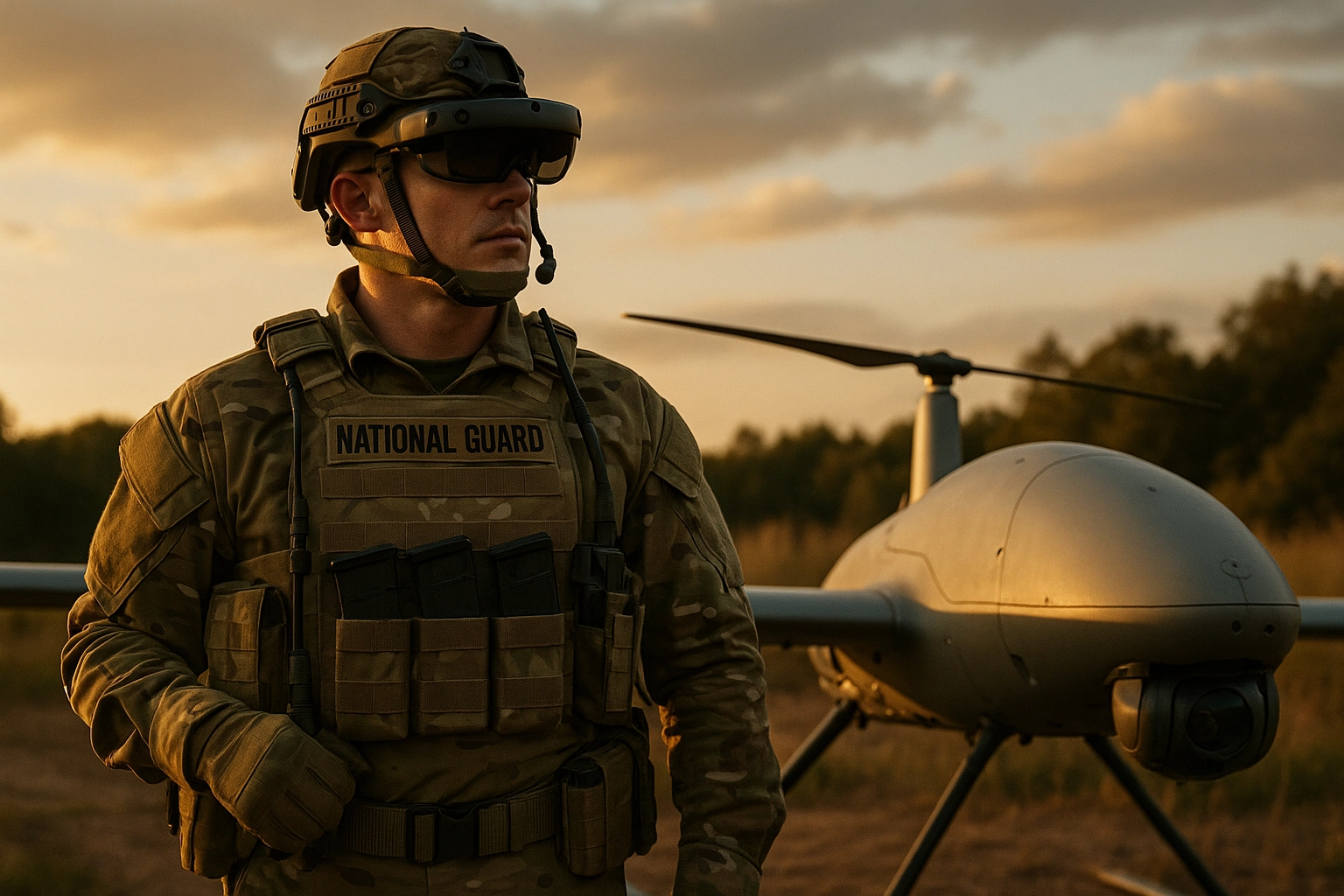
These formations represent a fundamental shift from traditional training models. Soldiers work alongside autonomous systems, artificial intelligence, and advanced simulators to create force multiplier effects that dramatically enhance operational capabilities.
State-of-the-Art Training Facilities Redefining Readiness
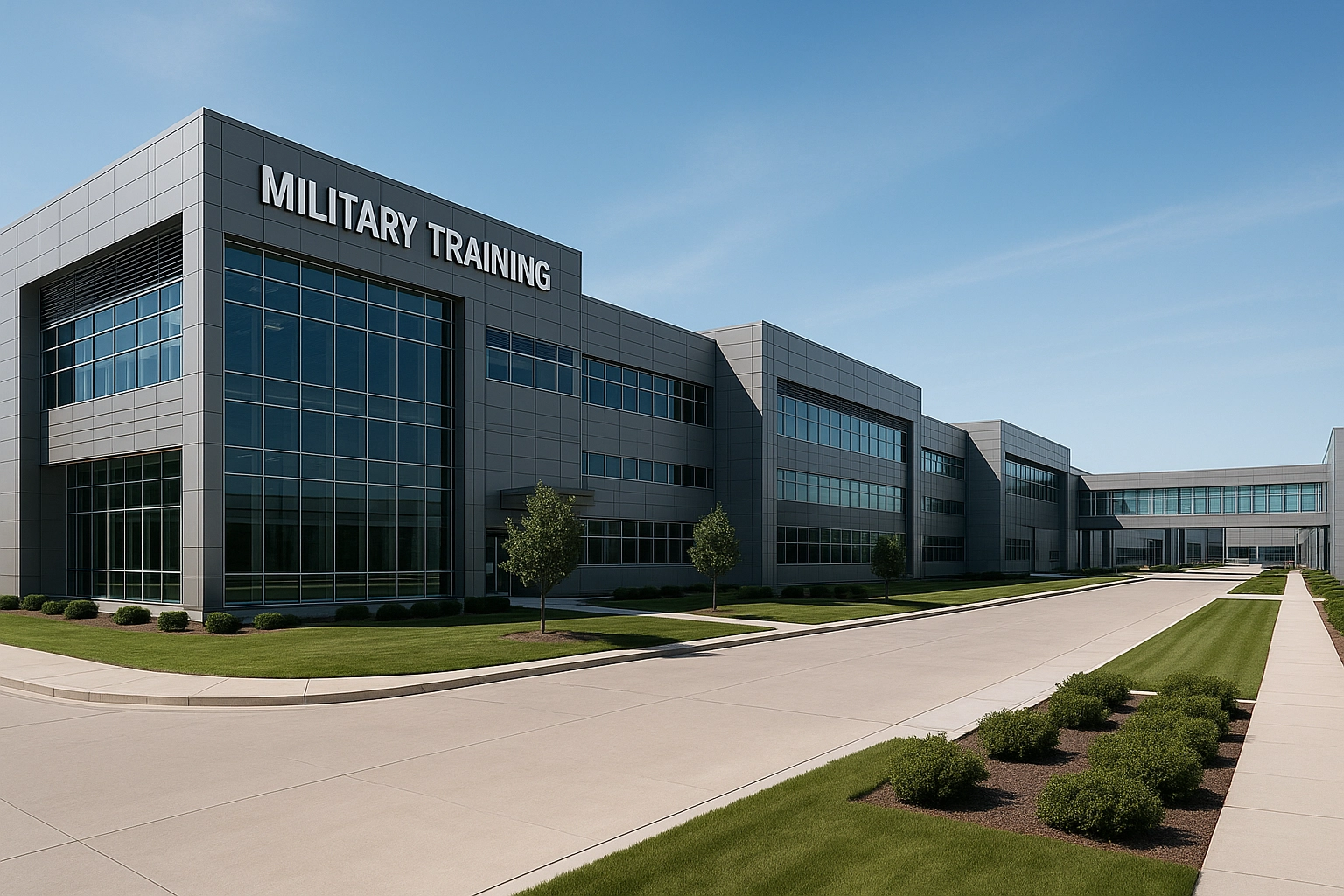
The National Guard operates sophisticated simulation facilities that rival any defense contractor's capabilities. The Joint Simulation Training Exercise Center (JSTEC) at Camp Atterbury exemplifies this advancement with approximately 80,000 square feet of indoor training space across eight specialized buildings.
The main 25,000 square foot building serves as exercise control space for major simulation exercises, while remaining buildings offer flexible, configurable spaces for individual unit training needs. These facilities feature robust network capabilities, including protected distribution systems for classified exercises and dedicated connectivity that allows participation in distributed training events worldwide.
The 25-acre Training Aids, Devices, Simulators, and Simulations (TADSS) complex provides comprehensive simulation capabilities that can replicate any operational environment. This infrastructure represents millions of dollars in investment that delivers training value previously available only to active-duty units.
Enhanced Realism Through Cutting-Edge Technology
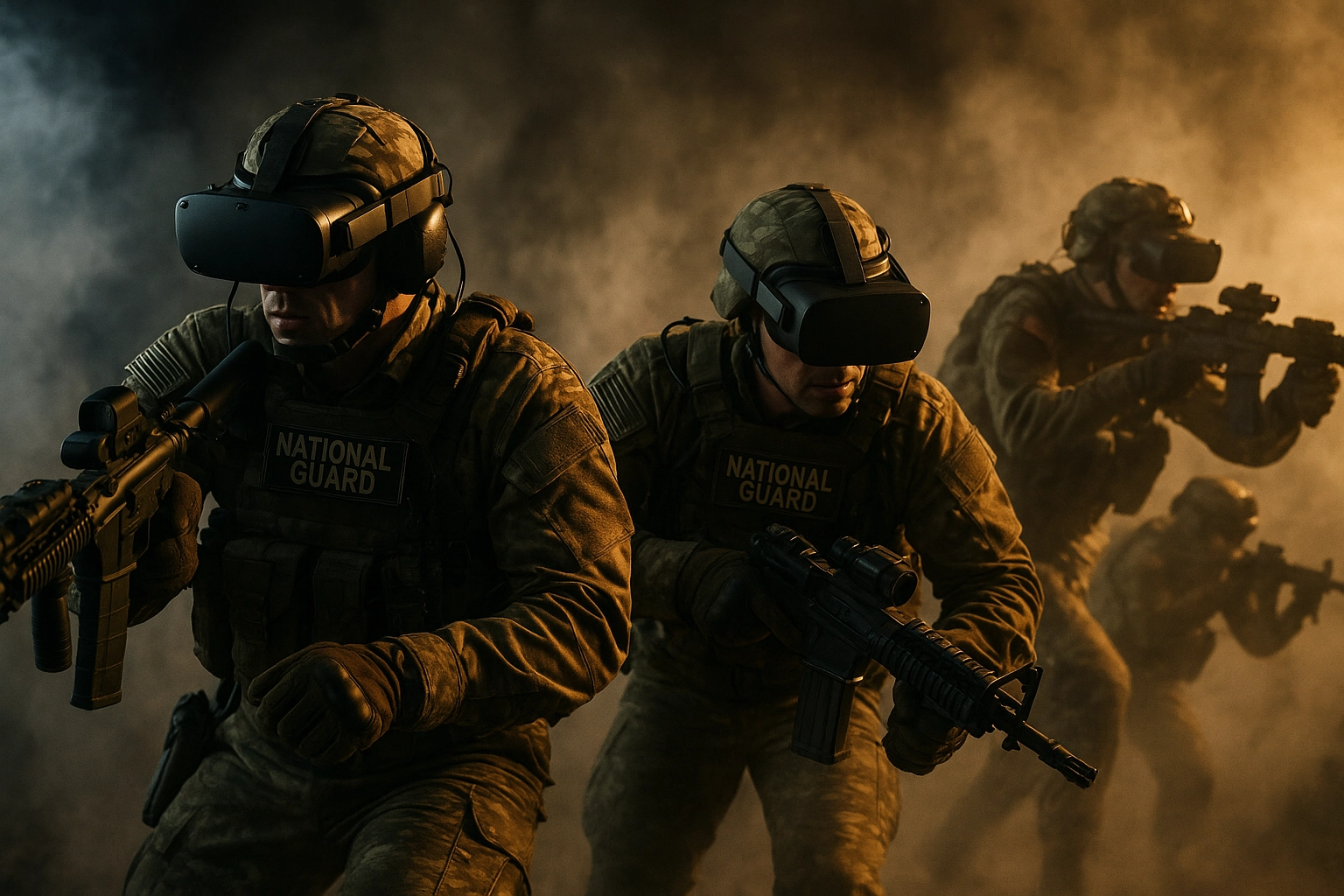
Recent National Guard exercises incorporate increasingly realistic elements that prepare soldiers for modern combat scenarios with unprecedented fidelity. Training now includes illumination flares, artillery simulators, smoke grenades, and even tracer rounds, some being used for the first time in decades at certain facilities.
The evolution reflects changing threat environments. Training scenarios now emphasize near-peer competitors rather than traditional asymmetric warfare. This shift acknowledges the reality that future conflicts may involve technologically sophisticated adversaries with capabilities that match or exceed our own.
Virtual reality integration allows soldiers to experience combat scenarios that would be impossible or prohibitively expensive to recreate in traditional field exercises. These simulations provide muscle memory development and decision-making practice that translates directly to real-world performance.
What challenges do you face in keeping your training programs current with evolving threats?
Industry Collaboration Challenges Defense Contractors Face
Defense contractors encounter significant obstacles when working with the Department of Defense on simulation and training technologies. Key constraints include uncertain government funding and product demand, narrow profit margins, complex solicitations, and frequent re-competitions.
Non-defense contractors cite specific concerns about DoD cost accounting standards, payment delays, and extended cycle times between bid and award. While nearly two-thirds of defense contractors would share R&D project information in a restricted DoD database, only 41 percent of non-defense contractors indicated similar willingness.
These contractors worry about loss of proprietary data, limited economic benefit, and reduced competitive advantage. This hesitation creates gaps between available commercial technology and military implementation that hybrid simulators are helping to bridge.
Distributed Training Capabilities Breaking Geographic Barriers
Modern National Guard simulation training emphasizes distributed operations capabilities that allow units to participate in training exercises regardless of geographical location. This approach enables multiple divisions and brigades to train simultaneously while connected through advanced network infrastructure.
The distributed model maximizes training opportunities without requiring extensive travel or facility consolidation. Units can participate in complex multi-echelon exercises from their home stations, dramatically reducing costs while increasing training frequency.
This connectivity extends internationally, allowing National Guard units to train alongside allied forces in virtual environments that replicate real-world coalition operations. The interoperability benefits extend far beyond cost savings to create genuine operational advantages.
The Economic Impact of Hybrid Training Solutions
Traditional field training exercises consume enormous resources in fuel, transportation, ammunition, and facility usage. Hybrid simulators reduce these costs by 60-80% while delivering equivalent or superior training value.
For procurement officers, the return on investment becomes compelling when examining total lifecycle costs. Initial simulator acquisition costs are offset within 2-3 years through reduced operational expenses and increased training throughput.

The efficiency gains allow National Guard units to conduct more frequent training cycles, improving overall readiness without proportional budget increases. This efficiency becomes critical as defense budgets face ongoing scrutiny and pressure.
Which aspect of hybrid simulation training would provide the biggest impact for your organization's readiness goals?
Implementation Strategies for Government Procurement
Successful hybrid simulator implementation requires careful planning and stakeholder alignment. Procurement teams should prioritize vendors with proven military integration experience and existing security clearances to accelerate deployment timelines.
Interoperability standards become crucial when selecting simulation platforms. Systems must integrate with existing command and control infrastructure while maintaining upgrade pathways for future technology insertion.
Training the trainer programs ensure maximum utilization of simulation capabilities. The most sophisticated simulator delivers minimal value without properly trained instructors who understand both the technology and military training objectives.
The transformation of National Guard training through hybrid simulators represents more than technological advancement, it's a fundamental reimagining of how reserve forces prepare for complex modern missions. As these capabilities continue evolving, the competitive advantages extend to enhanced readiness, improved retention, and mission success rates that traditional training methods simply cannot match.
Want more insights like this? Subscribe at https://smallfootprintsimulator.com.
Questions or partnerships? Call our AI Receptionist at +1 (970) 703-0102.
Dan Kost, CEO , Small footprint simulator
If this helped you, please comment, subscribe, and share.
Share this article:
Tags: #Motivation #Branding #Strategy #Marketing #AdvertisingAndMarketing #digitalmarketing #Innovation #NationalGuard #MilitaryTraining #DefenseSimulation #HybridTraining #GovernmentProcurement #DefenseContractors