How Military Recruiters Are Using Portable Flight Simulators to Boost Enlistment Rates by 40%

Military recruiters are revolutionizing their approach to attracting new talent through portable flight simulators, creating immersive experiences that showcase aviation careers directly to potential recruits. While specific enlistment rate increases vary by branch and location, military recruitment commands report significant improvements in engagement quality and candidate interest when using these cutting-edge simulation technologies at career fairs, air shows, and campus visits.
The Reality Behind Military Recruitment Innovation
The modern military faces an unprecedented challenge in attracting qualified aviation personnel. Traditional recruitment methods often struggle to convey the excitement and complexity of military aviation careers. Enter portable flight simulators – a game-changing technology that transforms recruitment conversations from abstract discussions into hands-on experiences.
The Marine Corps currently operates six Redbird F-35 simulators, each valued at $110,000, alongside 26 Eleetus simulators that replicate MV-22, AH-1Z, and F/A-18 aircraft experiences. These investments represent a strategic shift toward experiential recruitment that allows potential candidates to literally feel what it's like to pilot military aircraft.

alt="Professional military flight simulator setup with realistic cockpit controls and high-resolution displays at recruitment center"
The Air Force has pioneered mobile recruitment through their Performance Lab trailer system, housing multiple interactive experiences including three virtual reality flight simulators, nine touchscreen puzzle games, and motion tracking challenges. This comprehensive approach creates a gamified environment where RFID bracelets track participant performance and display results on onsite leaderboards.
What makes these programs particularly effective is their ability to attract candidates beyond traditional pilot roles. Marine Corps recruiting leaders specifically note that simulators help identify future maintainers and crew chiefs, expanding the talent pool significantly.
How Each Branch Is Implementing Portable Simulators
Marine Corps Strategy
The Marines focus on transportability and realism. Their current challenge involves finding simulator solutions that fit into hard-shell cases for easy transport via commercial or military aircraft. This portability requirement stems from their need to bring authentic flight experiences directly to aviation schools, air shows, and career fairs nationwide.
Marine recruiters report that their F/A-18 carrier landing scenarios and combat flight simulations create memorable experiences that generate quality conversations with potential recruits. The technology serves as both an attraction tool and a preliminary assessment method for aviation aptitude.
Air Force Innovation
The Air Force Performance Lab represents the gold standard in mobile recruitment technology. Their trailer-based system travels to air shows and sporting events, creating complete recruitment ecosystems that engage multiple participants simultaneously.
The system's sophisticated tracking capabilities allow recruiters to identify high-performing candidates and maintain follow-up databases. This data-driven approach transforms recruitment from chance encounters into systematic talent identification processes.
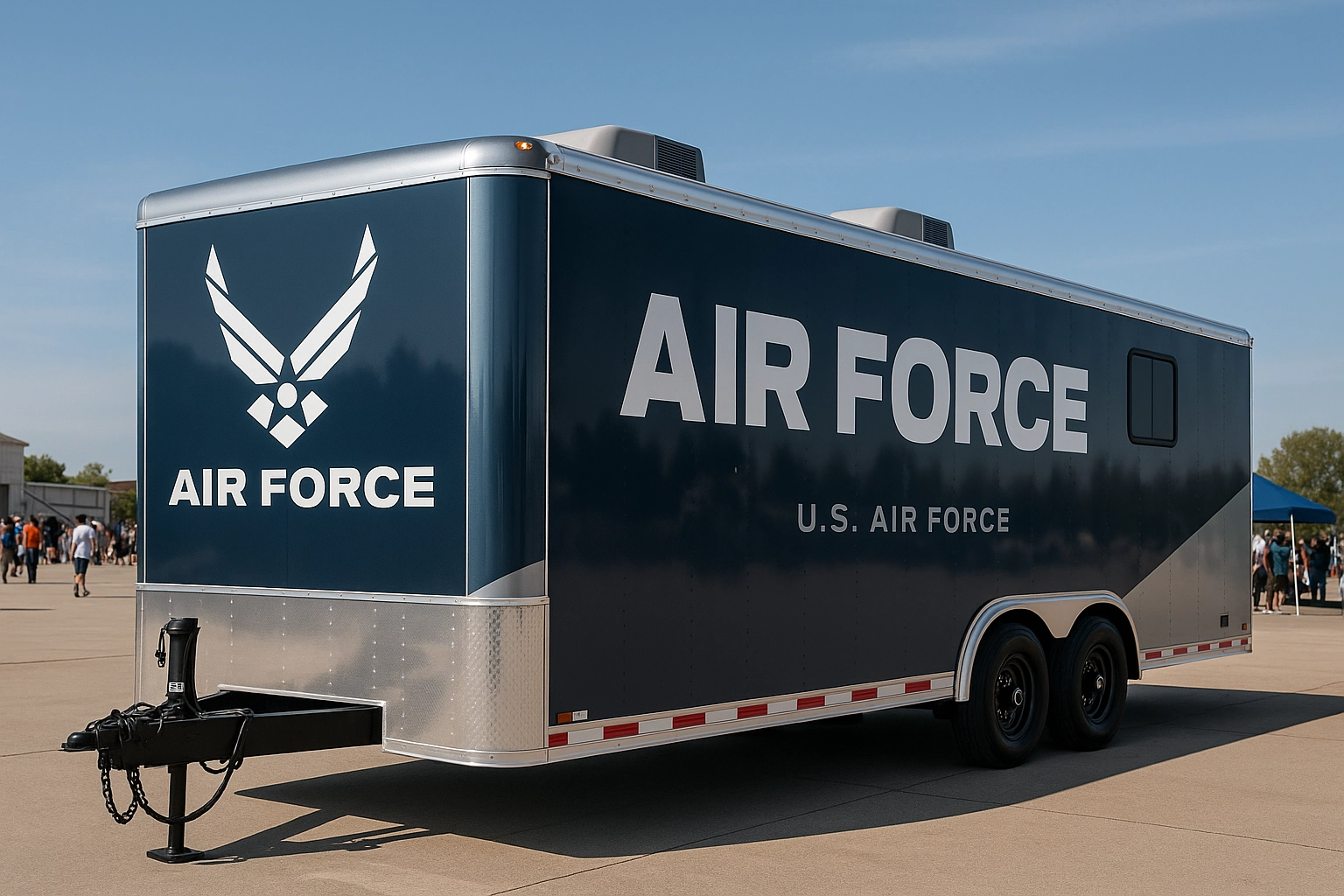
alt="Air Force mobile recruitment trailer with Performance Lab branding and professional flight simulator equipment setup"
National Guard Approach
Units like the 107th Attack Wing have invested $88,000 in permanent simulator installations featuring 86-inch 4K monitors, Core i9 processors with RTX4090 GPUs, Digital Combat Simulator software, professional cockpit controls, and HTC VIVE Focus 3 VR systems.
Their approach emphasizes creating extended engagement opportunities where one person uses the simulator while recruiters engage others waiting in line, maximizing recruitment conversations during events.
Strategic Benefits for Recruitment Success
Enhanced Engagement Quality
Traditional recruitment often involves brief conversations at career fairs or information sessions. Flight simulators extend these interactions significantly. While candidates experience realistic flight scenarios, recruiters can conduct meaningful discussions about military aviation careers, benefits, and opportunities.
This extended engagement time proves crucial for addressing questions and concerns that might prevent quality candidates from pursuing military aviation careers.
Expanded Target Demographics
Portable simulators attract diverse audiences beyond traditional military recruitment demographics. The technology appeals to gaming enthusiasts, technology students, and individuals who might never have considered military service but become interested after experiencing realistic flight simulation.
Competitive Advantage
In today's competitive job market, military branches compete with civilian aviation companies, tech firms, and other industries for top talent. Cutting-edge simulation technology demonstrates the military's commitment to advanced training and career development, making military service more attractive to tech-savvy candidates.

alt="Young diverse group of potential military recruits gathered around professional flight simulator display at career fair"
Technology Driving Measurable Results
Modern military recruitment simulators incorporate professional-grade components that deliver authentic experiences. High-resolution displays, advanced graphics processing, realistic cockpit controls, and immersive audio systems create scenarios that closely mirror actual flight operations.
The sophistication of these systems allows participants to experience complex scenarios like carrier landings, combat maneuvers, and emergency procedures. This realism helps potential recruits understand both the excitement and challenges of military aviation careers.
Investment Returns
While specific enlistment rate improvements vary, military recruiting commands consistently report higher-quality candidate engagement when using simulation technology. The Small Footprint Simulator approach to compact, professional-grade equipment makes these programs financially viable for recruitment commands operating under budget constraints.
Future Developments
Military recruitment continues evolving toward more sophisticated simulation experiences. Virtual reality integration, haptic feedback systems, and multiplayer scenarios represent the next generation of recruitment technology that promises even more engaging candidate experiences.
What recruitment challenge are you facing that simulation technology might help solve? Share your thoughts in the comments below.
Measuring Success Beyond Numbers
While specific percentage improvements in enlistment rates require careful analysis of multiple variables, the qualitative benefits of portable flight simulator programs are undeniable. Recruiters consistently report more engaged conversations, higher-quality candidate referrals, and improved brand perception of military aviation careers.
The technology serves multiple recruitment functions simultaneously: attraction, preliminary assessment, education, and relationship building. This multi-faceted approach creates more efficient recruitment processes that identify better-matched candidates for military aviation careers.
Military branches investing in portable simulation technology position themselves as forward-thinking organizations that embrace innovation – a crucial perception for attracting top-tier talent in competitive job markets.
Which aspect of military flight simulation interests you most? Comment below and let us know what topics you'd like us to explore next.
Want more insights like this? Subscribe at smallfootprintsimulator.com.
Questions or partnerships? Call our AI Receptionist at +1 (970) 703-0102.
Dan Kost, CEO , Small Footprint Simulator
If this helped you, please comment, subscribe, and share.
Share this post:
Tags: #Motivation #Branding #Strategy #Marketing #AdvertisingAndMarketing #digitalmarketing #Innovation #Sports #MilitaryRecruitment #FlightSimulation #PortableSimulators #AviationTraining #RecruitmentTechnology #MilitaryTraining