Flight Schools vs AI-Powered Simulators: Which Creates Job-Ready Pilots Faster in 2025?
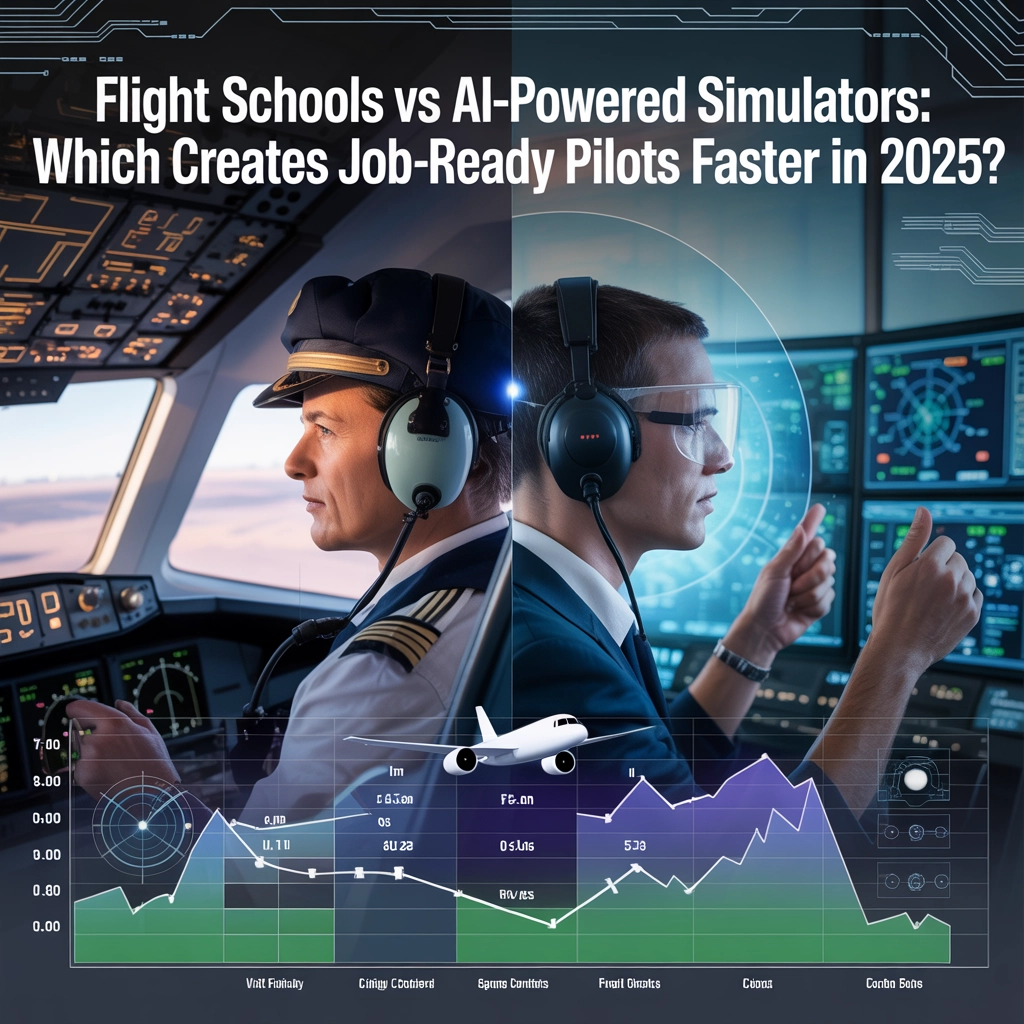
The aviation training industry stands at a critical crossroads in 2025. Traditional flight schools, long considered the gold standard for pilot training, now face fierce competition from AI-powered simulators that promise faster, more cost-effective training. But which approach actually produces job-ready pilots more efficiently?
The short answer: AI-powered simulators excel at initial skill building and emergency training at a fraction of the cost, while traditional flight schools provide irreplaceable real-world experience and industry connections. The most successful training programs in 2025 combine both approaches strategically.
This comprehensive analysis will help training program managers, flight schools, and aviation educators make informed decisions about their pilot development strategies.
The AI-Powered Simulator Revolution
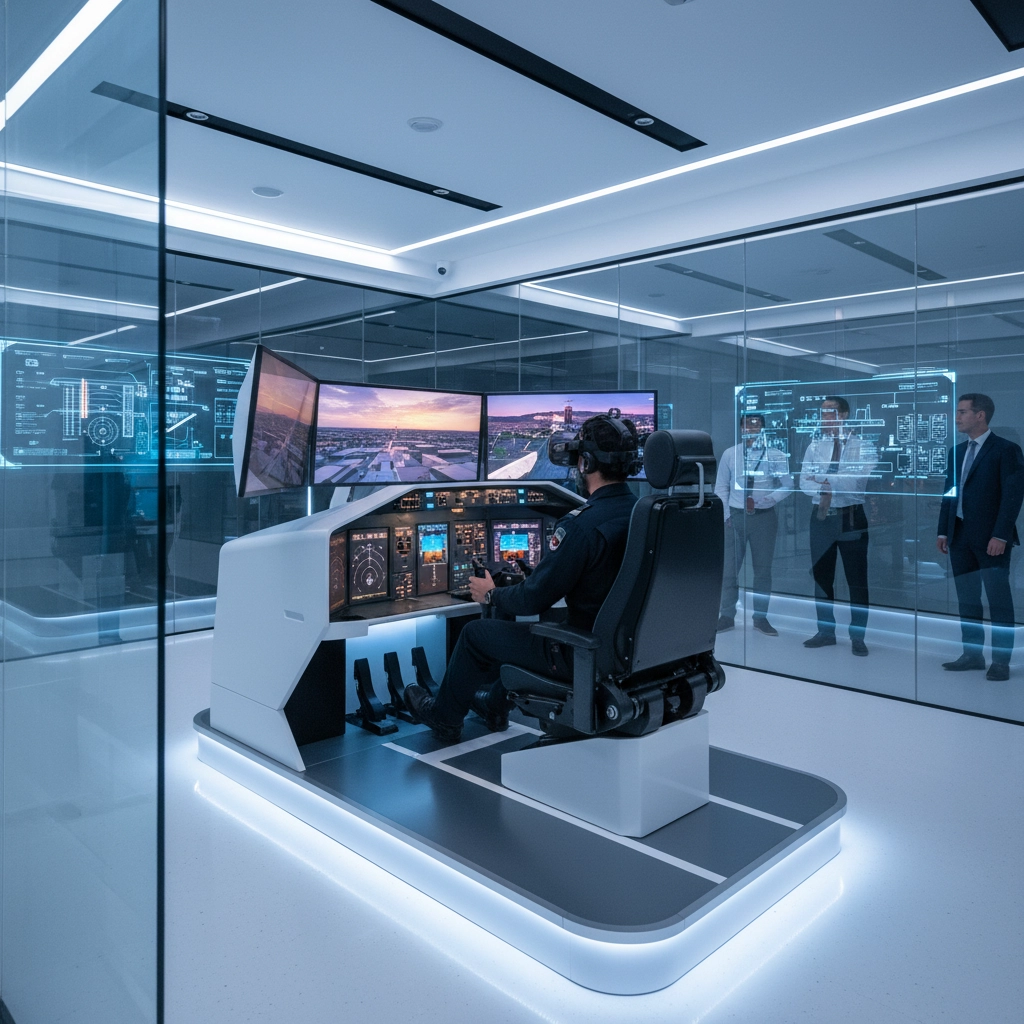
AI-powered flight simulators have transformed from basic training aids into sophisticated learning systems that adapt to individual pilot performance in real-time. These systems track comprehensive data including reaction times, control inputs, and biometric stress indicators, then automatically adjust training scenarios to address specific weaknesses.
Key Advantages of AI-Powered Simulators
Cost Efficiency That Changes Everything
VR training devices cost significantly less to operate than traditional full-flight simulators. There are no fuel costs, reduced maintenance requirements, and minimal facility overhead. A single AI simulator can train multiple students simultaneously in virtual environments, dramatically improving cost per student hour.
Personalized Learning at Scale
Unlike traditional one-size-fits-all curricula, AI systems create individualized training paths. Students advance based on demonstrated proficiency rather than fixed hour requirements. The technology identifies knowledge gaps and provides targeted remediation, potentially reducing total training time by 20-30%.
Risk-Free Emergency Training
AI simulators can safely replicate dangerous scenarios that would be impossible or extremely risky to practice in real aircraft. Engine failures, severe weather, and system malfunctions become routine training exercises without safety concerns.
24/7 Availability and Global Access
AI-powered systems operate continuously, allowing students to train on flexible schedules. This accessibility is particularly valuable for international students or working professionals pursuing aviation careers.
Current Limitations
Despite their promise, AI simulators face regulatory challenges. While EASA updated rules in 2024 allowing VR devices to fulfill "full-flight simulator" roles in certain scenarios, comprehensive AI-based training still requires clearer oversight for data privacy, algorithm validation, and certification standards.
Traditional Flight Schools: The Proven Foundation
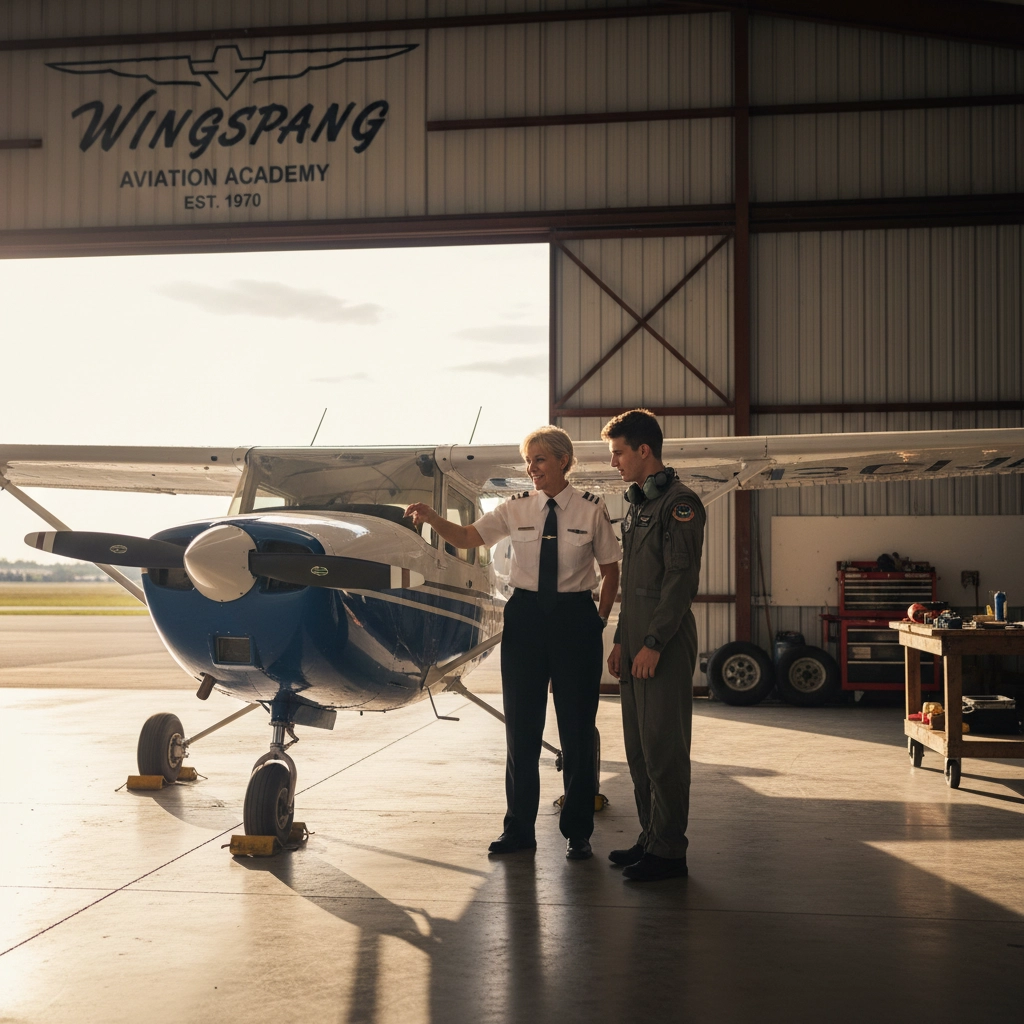
Established flight schools maintain significant advantages through decades of proven results, comprehensive regulatory compliance, and deep industry relationships. Many leading institutions are successfully integrating modern technology while preserving their core strengths.
Enduring Strengths of Flight Schools
Regulatory Compliance and Certification
Traditional flight schools operate within well-established FAA frameworks with clear pathways to commercial pilot certificates. Their training programs meet all federal requirements without the regulatory uncertainty surrounding newer AI-based approaches.
Real-World Experience No Simulator Can Replicate
Actual aircraft provide sensory feedback, weather challenges, and mechanical realities that even the most advanced simulators cannot fully duplicate. Real flights develop situational awareness and decision-making skills that prove crucial in professional aviation careers.
Industry Connections and Career Pipelines
Established flight schools maintain direct relationships with airlines, charter companies, and aviation employers. Many programs feature guaranteed interview opportunities or direct hiring partnerships that significantly accelerate career placement.
Human Mentorship and Peer Learning
Experienced flight instructors provide nuanced guidance, share real-world insights, and offer mentorship that extends beyond technical skills. The collaborative learning environment helps develop the communication and teamwork abilities essential for airline careers.
Traditional Challenges
Flight schools face higher operational costs due to aircraft maintenance, fuel, insurance, and instructor availability. Weather dependencies and equipment constraints can slow training progress, while fixed curricula may not address individual learning needs as effectively as AI systems.
Comprehensive Performance Comparison
| Training Aspect | AI-Powered Simulators | Traditional Flight Schools |
|---|---|---|
| Initial Cost | 60-70% lower than traditional | Higher upfront investment |
| Training Speed | 20-30% faster for basic skills | Standard industry timelines |
| Safety Record | Zero accident risk | Inherent aviation risks |
| Regulatory Status | Evolving, some uncertainty | Fully established compliance |
| Personalization | Highly individualized algorithms | Limited by instructor capacity |
| Real-World Preparation | Excellent for procedures/emergencies | Superior for actual flight conditions |
| Career Placement | Technology partnerships | Direct airline relationships |
| Global Accessibility | Available anywhere with internet | Limited to physical locations |
The Optimal Strategy for 2025
The most effective approach combines both methodologies rather than choosing exclusively. Progressive training programs are implementing hybrid models that leverage each approach's strengths while mitigating their weaknesses.

Hybrid Training Framework
Phase 1: AI-Powered Foundation Building
Students begin with AI simulators for ground school, basic flight controls, and emergency procedures. This phase builds fundamental skills efficiently while identifying areas requiring additional focus.
Phase 2: Traditional Flight Experience
Once basic competencies are established through AI training, students transition to actual aircraft with experienced instructors. This phase focuses on real-world application, weather flying, and advanced decision-making.
Phase 3: Integrated Advanced Training
The final phase alternates between AI simulators for complex scenario training and real flights for skill validation and industry-standard checkrides.
Implementation Recommendations
For Budget-Conscious Programs: Start with AI simulators for 60-70% of initial training, then focus traditional flight hours on areas where real aircraft experience is irreplaceable.
For Career-Track Programs: Partner with established flight schools for industry connections while incorporating AI systems to reduce training costs and accelerate skill development.
For International Students: Begin AI-based training immediately while processing visas and relocations, then transition to traditional programs for certification and career placement.
Market Trends and Future Outlook
The civil aviation training market's projected growth to $35.84 billion by 2034 indicates strong demand for both approaches. Flight training devices show the fastest expected growth, suggesting the industry recognizes AI simulators' value while maintaining traditional training's importance.
Leading aviation programs are investing in both technologies rather than replacing one with the other. This trend suggests that successful pilot training in 2025 and beyond requires intelligent integration rather than technological substitution.
Which training challenges does your program face that a hybrid approach might solve? The aviation industry's future depends on preparing pilots efficiently while maintaining safety and competency standards.
Want more insights like this? Subscribe at Small Footprint Simulator.
Questions or partnerships? Call our AI Receptionist at +1 (970) 703-0102.
Dan Kost, CEO, Small Footprint Simulator.
If this helped you, please comment, subscribe, and share.
Share this article:
Tags: #Motivation #Branding #Strategy #Marketing #AdvertisingAndMarketing #digitalmarketing #Innovation #Sports #FlightTraining #AViation #PilotTraining #AIPowered #FlightSimulation #MilitaryTraining