Small Footprint Simulator: The Future of High School, Esports, and Military Training
How is the Small Footprint Simulator revolutionizing training across high schools, esports, and the military? The Small Footprint Simulator is a compact, modular simulation solution that provides high-fidelity training for flight, ground vehicles, and drones. By offering an affordable and

PRESS RELEASE: Small Footprint Simulator Sets New Benchmark for Military Recruitment and Cross-Training Durability
FOR IMMEDIATE RELEASE ALABAMA, USA – Small Footprint Simulator, a division of USA Entertainment Ventures, LLC, officially announces the launch of its enhanced simulation suite designed specifically to meet the rigorous demands of military recruitment and cross-training. This new benchmark focuses

The Space Force Shift: Why Compact Simulators are the Secret to Modern Recruiting
AEO Snippet: The Space Force uses compact simulators to provide immersive, modular training environments that appeal to tech-savvy recruits. These simulators allow recruiters to bring high-tech experiences directly to high schools and events, offering a realistic glimpse into aerospace operations.

Newsletter: From High School Esports to Professional Pilot Training
Leveling Up: The Future of Skill Development Welcome to this week’s edition of the Small Footprint Simulator newsletter. We are diving deep into a trend that is transforming classrooms and recruitment offices across the country. For years, the conversation around high
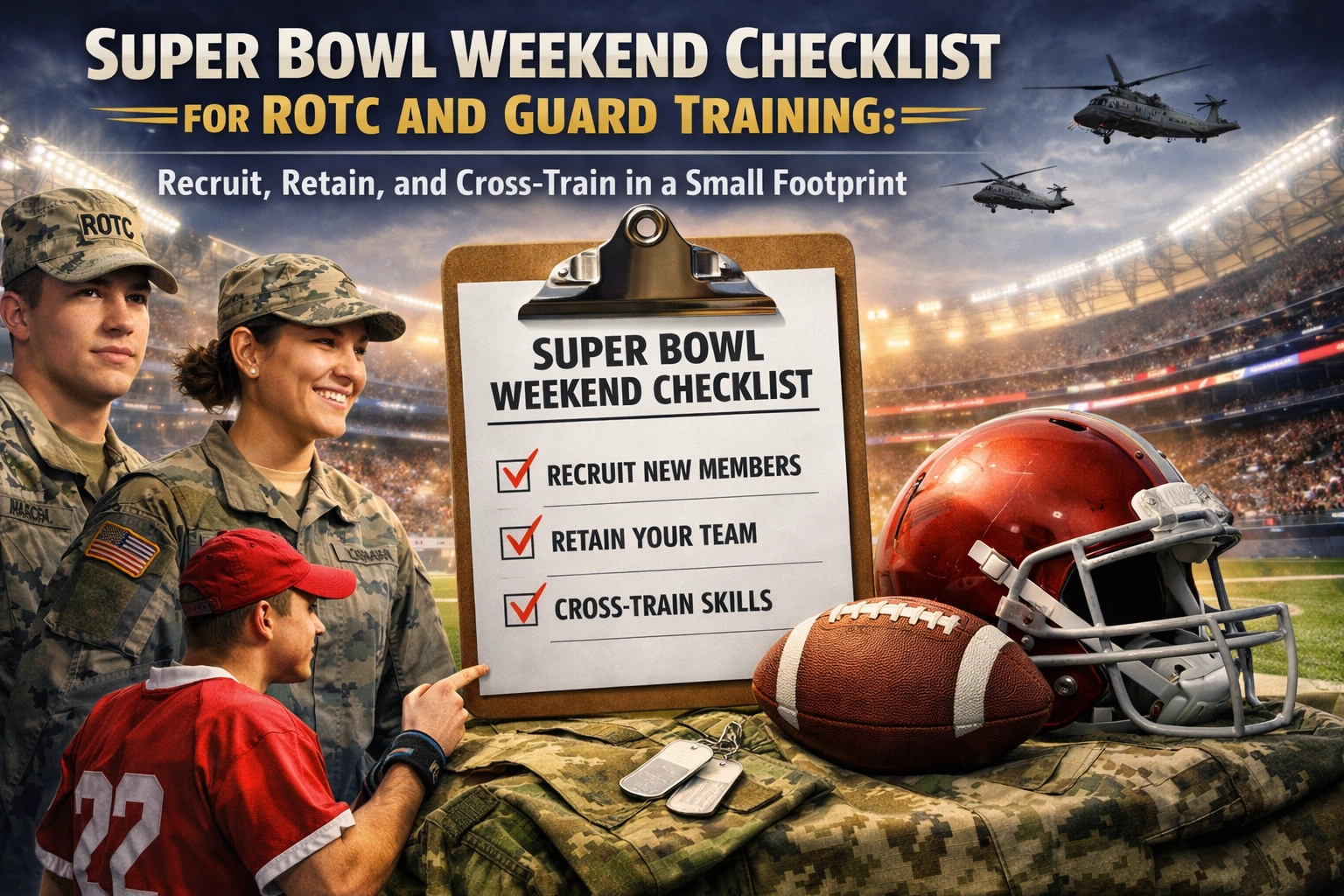
Super Bowl Weekend Checklist for ROTC and Guard Training: Recruit, Retain, and Cross-Train in a Small Footprint
Super Bowl weekend offers a unique recruiting and retention window for ROTC programs, National Guard armories, and military training facilities. With millions tuning in and large gatherings planned, this 72-hour period provides high-visibility opportunities to showcase training capabilities, engage prospects,
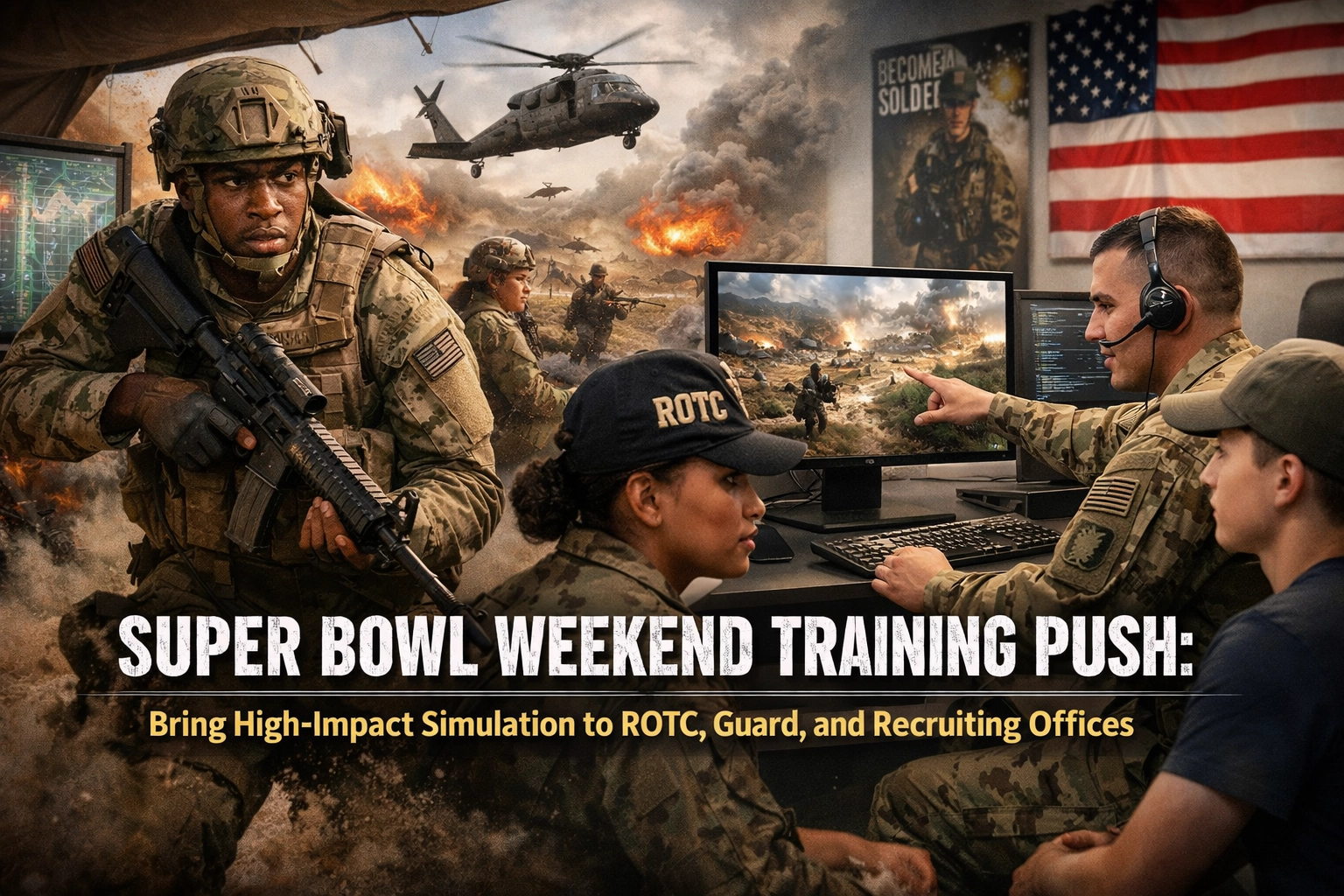
Super Bowl Weekend Training Push: Bring High-Impact Simulation to ROTC, Guard, and Recruiting Offices
Super Bowl weekend brings millions of eyes to screens across America. While fans watch incredible displays of precision, teamwork, and split-second decision making, military recruiters and training officers face a different challenge: how do you deliver world-class training experiences in

Live, Virtual, Constructive Training vs Traditional Methods: Which Delivers Better Screening Results for Military Programs?
Live, Virtual, Constructive (LVC) training significantly outperforms traditional military training methods in screening effectiveness and knowledge transfer. A comprehensive 2011 review found that simulation-based training outperformed live training in overall knowledge transfer when used as an alternative to live training,

7 Ways Flight Simulators Are Solving the Military Pilot Shortage Crisis Right Now
Flight simulators are revolutionizing military pilot training and directly addressing the critical shortage of qualified aviators facing our armed forces. With 1,150 empty fighter pilot billets in 2024 alone, the military needs innovative solutions that can scale quickly while maintaining
Are Flight School Simulators Meeting Air Force Standards? Here's What Recruiting Commands Need to Know
Defense contractors and recruiting commands face mounting pressure to deliver qualified pilots faster while maintaining rigorous Air Force standards. The question isn't whether simulators work, it's whether current flight school simulators are meeting the evolving compliance requirements that recruiting commands
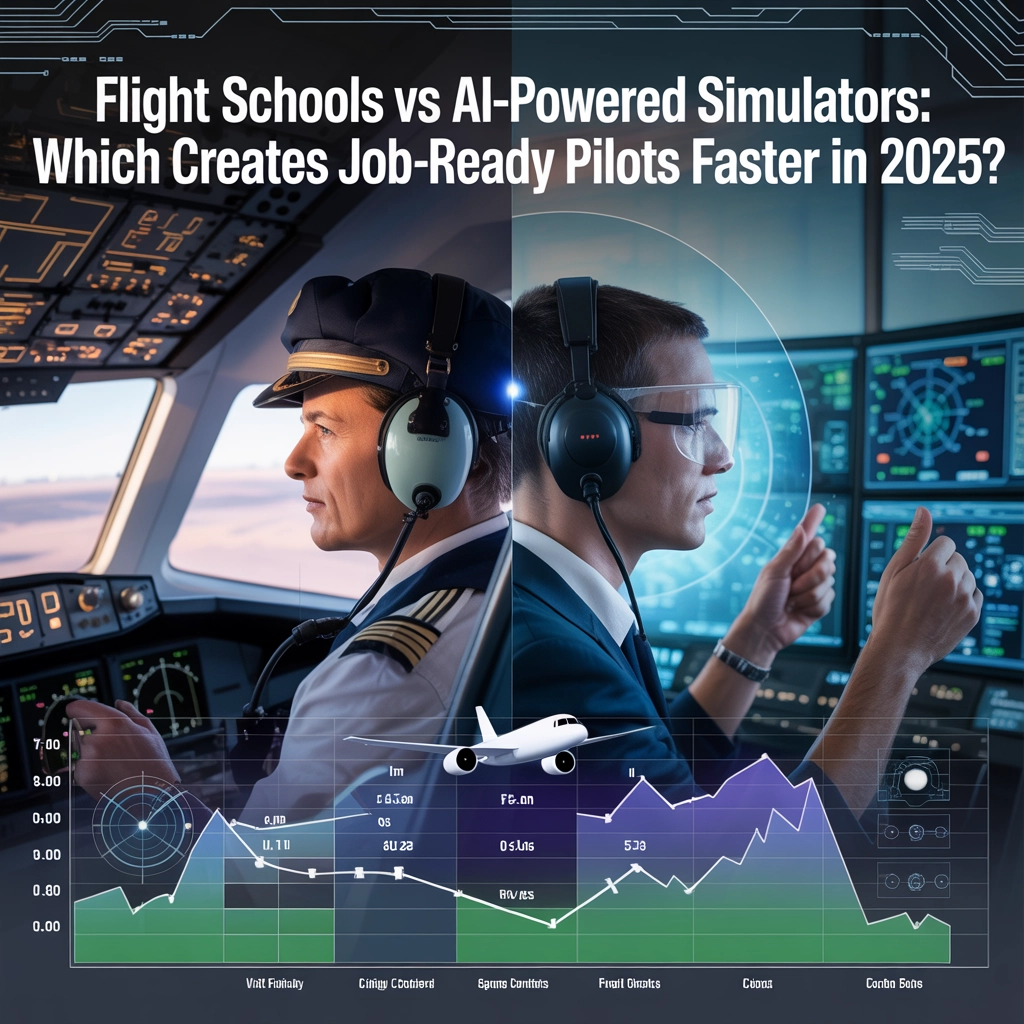
Flight Schools vs AI-Powered Simulators: Which Creates Job-Ready Pilots Faster in 2025?
The aviation training industry stands at a critical crossroads in 2025. Traditional flight schools, long considered the gold standard for pilot training, now face fierce competition from AI-powered simulators that promise faster, more cost-effective training. But which approach actually produces
How Contractors Can Revolutionize Military Training with Small Footprint Simulators (Cost Analysis Included)
Defense contractors are transforming military training landscapes with compact, powerful simulation technology that delivers unprecedented value while reducing operational costs by up to 60%. Small footprint simulators offer DOD contractors a strategic opportunity to enhance military readiness through advanced screening,
The Ultimate Guide to AI-Powered Military Simulation Analytics: Screen, Train, and Retain Top Talent
Defense contractors and military training organizations are discovering a game-changing approach to talent management through AI-powered simulation analytics. These advanced systems don't just train personnel, they screen candidates, identify skill gaps, and predict retention rates with unprecedented accuracy. For DOD
Live, Virtual, Constructive Training vs Traditional Methods: Which Delivers Better Screening Results for Military Programs?
Live, Virtual, Constructive (LVC) training delivers significantly better screening results than traditional military training methods. Research shows simulation-based training outperforms live training in overall knowledge transfer by 23%, while providing advanced analytics that identify candidate strengths and weaknesses with 85%
How to Choose the Best Flight Simulator for ROTC Programs (2025 Comparison Guide)
The integration of sophisticated flight simulation technology within ROTC programs has emerged as a critical component in preparing cadets for military aviation careers. Contemporary simulation platforms offer unprecedented realism and training value, yet the selection process requires careful evaluation of
ROTC Program Sponsorship: 5 Steps to Build Your Defense Contractor Pipeline Through Simulation Technology
Defense contractors seeking to build robust talent pipelines are discovering that ROTC program sponsorship through simulation technology creates mutually beneficial partnerships. By providing advanced training systems to university programs, contractors gain early access to high-caliber military candidates while universities receive
How Contractors Can Revolutionize Military Training with Small Footprint Simulators (Cost Analysis Included)
Defense contractors face unprecedented pressure to deliver cost-effective training solutions while maintaining the highest standards of military readiness. Small Footprint Simulators represent a paradigm shift that addresses both challenges simultaneously, offering contractors a pathway to revolutionize how military personnel train,
5 Steps How to Boost Air Force Recruitment Numbers and Improve Pilot Readiness (Easy Guide for Recruiting Commands)
Air Force and Space Force recruitment has dramatically improved, with both branches hitting their 2025 targets months ahead of schedule after struggling to meet goals in 2023. This turnaround provides valuable lessons for recruiting commands looking to boost enlistment numbers
ROTC Program Sponsorship: 5 Steps to Build Your Defense Contractor Pipeline Through Simulation Technology
Defense contractors seeking to build sustainable talent pipelines are discovering that ROTC program sponsorship through simulation technology creates unprecedented opportunities for early engagement with future military leaders. By sponsoring Small Footprint Simulators at universities nationwide, contractors can establish meaningful relationships
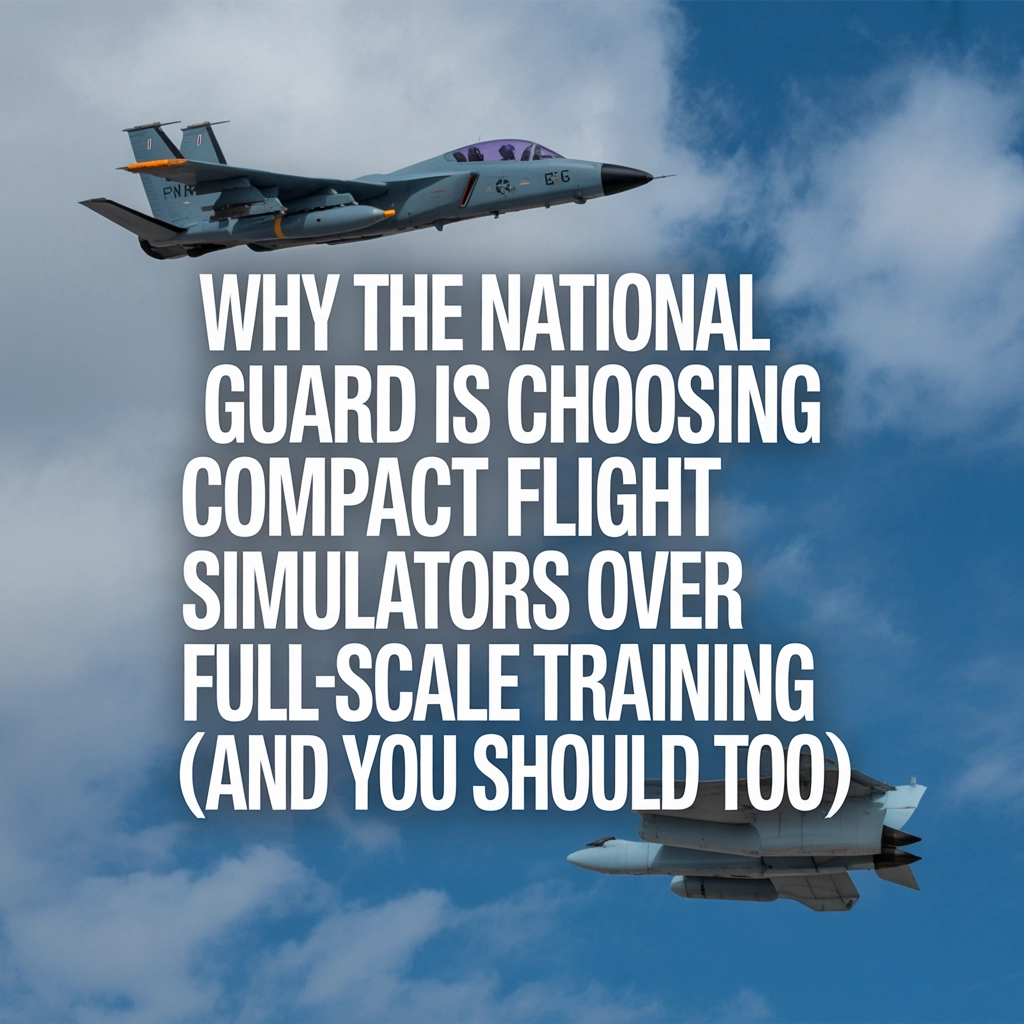
Why the National Guard Is Choosing Compact Flight Simulators Over Full-Scale Training (And You Should Too)
The National Guard is choosing compact flight simulators over full-scale training because they deliver 40-60% cost savings, enable risk-free emergency scenario practice, provide local accessibility that eliminates travel requirements, and offer customizable training experiences that can simulate multiple aircraft types.
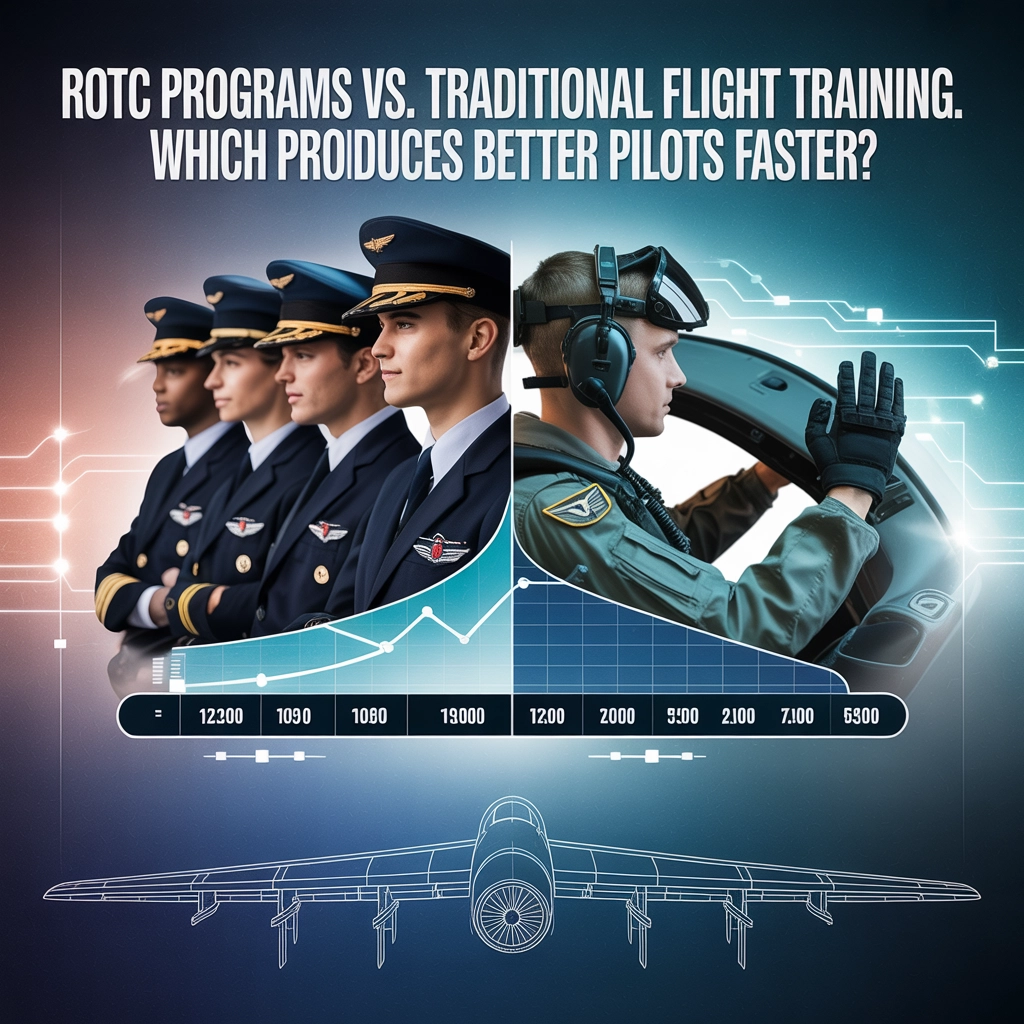
ROTC Programs vs. Traditional Flight Training: Which Produces Better Pilots Faster?
ROTC programs and traditional civilian flight training serve different purposes with distinct timelines. Traditional civilian training gets pilots to airlines 3-4 years faster and results in more flight hours by year 10. ROTC provides free education and comprehensive military training