Are Flight School Simulators Meeting Air Force Standards? Here's What Recruiting Commands Need to Know
Defense contractors and recruiting commands face mounting pressure to deliver qualified pilots faster while maintaining rigorous Air Force standards. The question isn't whether simulators work, it's whether current flight school simulators are meeting the evolving compliance requirements that recruiting commands need to achieve their mission-critical objectives.
Current Air Force simulator programs demonstrate significant compliance achievements, with the F-35 Lightning II training system successfully graduating over 2,688 pilots from 12 nations. However, gaps remain in screening capabilities and analytics that could help contractors identify and develop top-tier candidates more efficiently through ROTC programs and classroom deployments.
Current Compliance Landscape for DOD Contractors
Air Force training standards continue evolving, with new Mixed-Mode Reality Training (MMRT) units scheduled for delivery to USAF facilities in 2025. These advanced systems represent the next generation of simulator compliance requirements that contractors must understand when deploying classroom-based screening solutions.

The challenge for recruiting commands lies in balancing traditional training methods with innovative screening technologies. While the F-35 program operates successfully at over 30 bases globally, many contractors still rely on outdated assessment methods that miss early indicators of pilot readiness.
Key compliance areas recruiting commands should monitor:
- Integration with existing Air Force training protocols
- Data analytics capabilities for candidate screening
- Classroom deployment compatibility with ROTC programs
- Real-time performance tracking and reporting
- Cost-effectiveness compared to traditional methods
Analytics-Driven Screening: The Competitive Advantage
Modern simulator technology offers unprecedented insights into candidate performance through advanced analytics platforms. These systems can identify subtle patterns in pilot behavior, decision-making speed, and stress response that traditional screening methods often miss.
Contractors implementing analytics-driven screening report improved candidate success rates and reduced training washout costs. The data reveals crucial insights about spatial awareness, multitasking capabilities, and reaction times under pressure, all critical factors for Air Force pilot success.
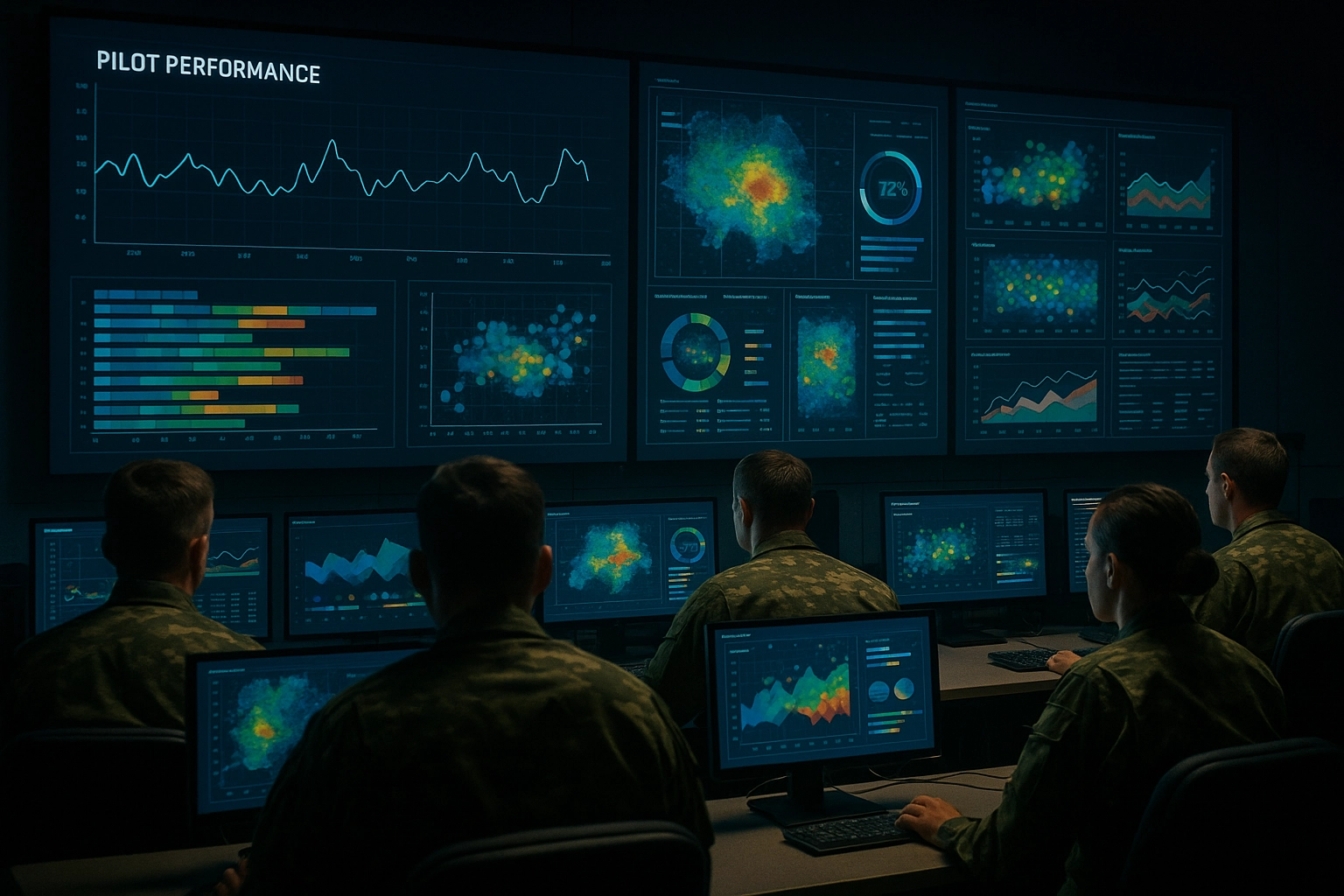
Essential analytics capabilities for recruiting commands:
- Real-time performance dashboards
- Predictive modeling for candidate success
- Comparative analysis across training cohorts
- Integration with existing military databases
- Automated reporting for command review
The Small Footprint Simulator platform provides these analytics capabilities while maintaining full compliance with Air Force data security requirements, making it ideal for classroom deployments at universities and training facilities.
Classroom Deployment Strategies for Maximum Impact
Successful simulator deployment in classroom environments requires careful planning and integration with existing curricula. The most effective programs combine traditional academic instruction with hands-on simulator experience, creating immersive learning environments that prepare candidates for advanced training.
Universities hosting ROTC programs represent prime opportunities for contractor sponsorship and deployment. These partnerships allow contractors to identify promising candidates early while providing valuable training resources to academic institutions.
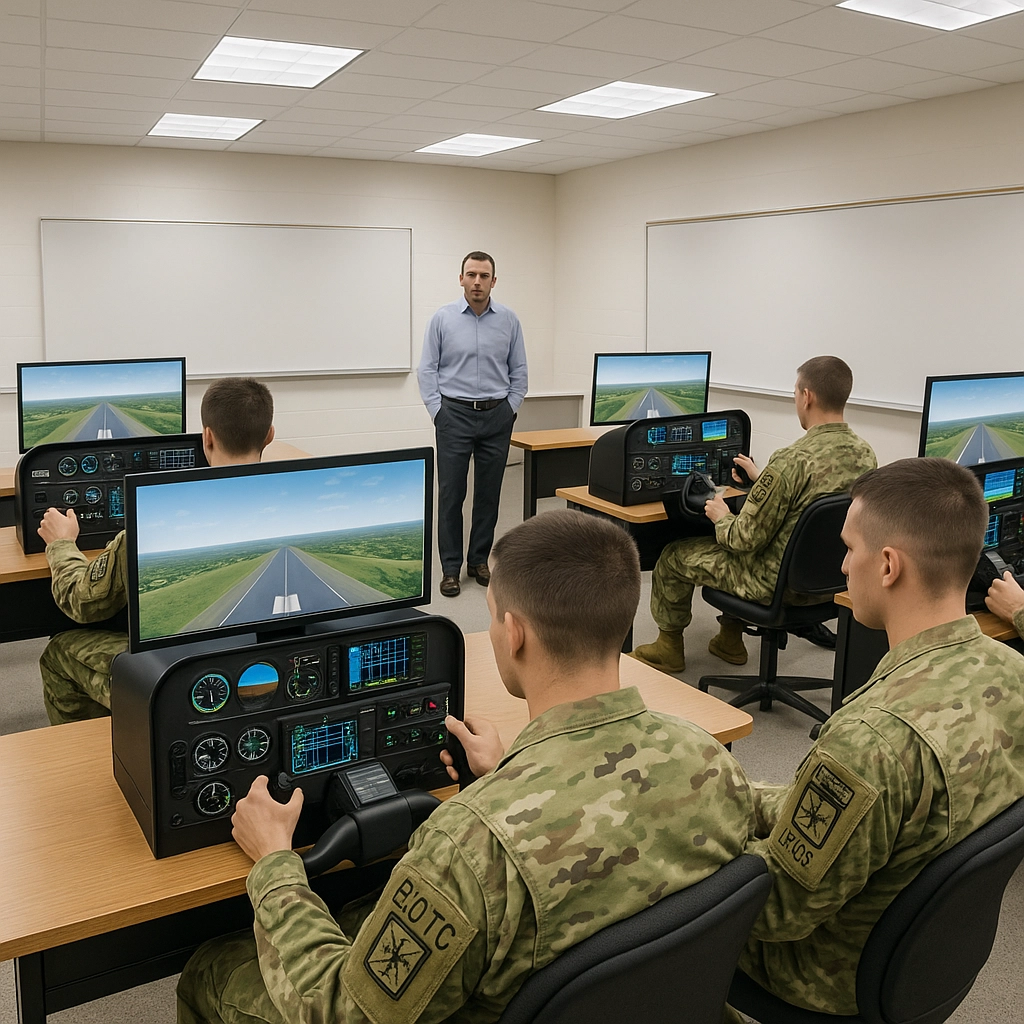
Best practices for classroom simulator deployment:
- Integration with existing flight science curricula
- Instructor training and certification programs
- Regular software updates and maintenance protocols
- Student progress tracking and reporting systems
- Coordination with local recruiting commands
ROTC Sponsorship Opportunities and ROI
Defense contractors increasingly recognize ROTC program sponsorship as a strategic investment in future talent pipelines. By providing cutting-edge simulator technology to universities, contractors gain early access to top candidates while building long-term relationships with academic institutions.
The ROI extends beyond immediate recruitment benefits. Sponsored programs create brand awareness, demonstrate technological leadership, and provide valuable feedback for product development. Universities benefit from enhanced training capabilities that attract high-quality students to their programs.
Strategic sponsorship considerations:
- Geographic coverage and regional talent pools
- University reputation and program quality
- Existing relationships with military commands
- Technology transfer and research opportunities
- Long-term partnership potential
Which ROTC programs in your region could benefit from advanced simulator technology, and how might sponsorship align with your recruitment objectives?
Technology Integration and Future-Proofing
Air Force training requirements continue advancing, with Amorphic Appearance Zero-Projector Environment (AMAZE) visual display systems scheduled for deployment in 2026. Contractors must ensure their classroom simulators can integrate with these emerging technologies to maintain compliance and effectiveness.
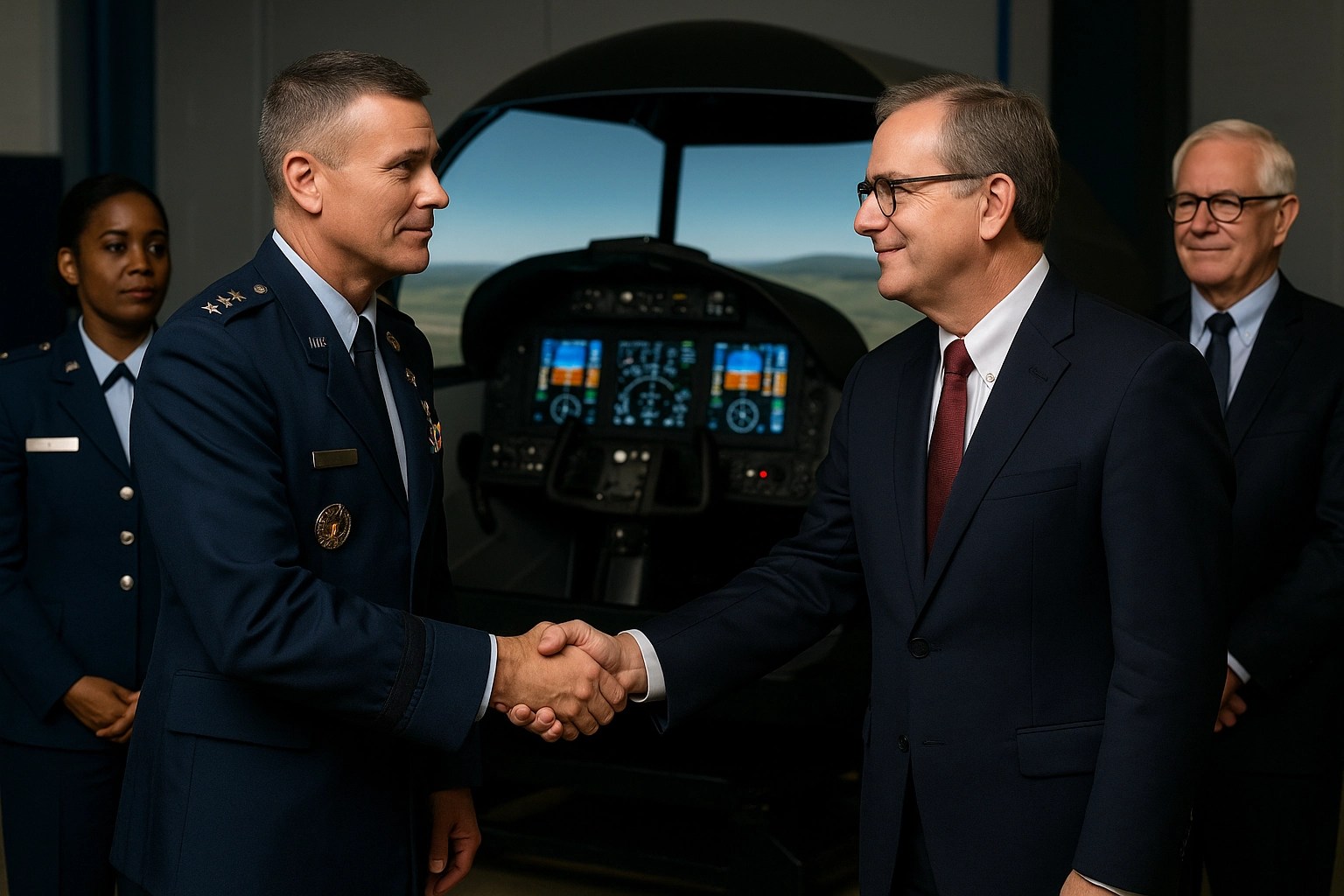
The Small Footprint Simulator addresses this challenge through modular design and regular software updates that keep pace with Air Force technological advancement. This approach protects contractor investments while ensuring continued compliance with evolving standards.
Future-proofing strategies include:
- Modular hardware design for easy upgrades
- Cloud-based software architecture
- Regular compliance audits and updates
- Integration testing with new Air Force systems
- Continuous feedback from active training programs
Cost-Effectiveness Analysis for Recruiting Commands
Traditional pilot screening methods consume significant resources while providing limited predictive value. Simulator-based screening offers measurable cost savings through improved candidate selection accuracy and reduced training washouts.
The numbers tell a compelling story: every candidate who successfully completes Air Force pilot training represents a multi-million-dollar investment. Even modest improvements in selection accuracy generate substantial ROI for recruiting commands and their contractor partners.

Cost-benefit considerations:
- Reduced training washout rates
- Earlier identification of high-potential candidates
- Lower per-candidate screening costs
- Improved resource allocation efficiency
- Enhanced recruitment marketing capabilities
Implementation Roadmap for Success
Successful simulator implementation requires systematic planning and execution. The most effective programs begin with pilot deployments at select institutions, gather performance data, and scale based on proven results.
Recruiting commands should prioritize partnerships with universities that demonstrate strong ROTC programs, supportive administration, and adequate technical infrastructure. These foundation partnerships provide the platform for broader deployment initiatives.
Implementation phases:
- Pilot program selection – Choose 2-3 high-potential universities
- Technology deployment – Install simulators and training systems
- Instructor certification – Train university staff on system operation
- Performance monitoring – Track candidate progress and outcomes
- Program expansion – Scale to additional institutions based on results
What's the biggest challenge you face with current pilot screening methods, and how might advanced simulation technology address those concerns?
Measuring Success and ROI
Effective measurement requires clear metrics and regular reporting protocols. The most successful programs track both immediate performance indicators and long-term candidate success rates through advanced training programs.
Key performance indicators should align with recruiting command objectives while providing actionable insights for program optimization. Regular reviews ensure continuous improvement and demonstrate value to stakeholders.
Essential success metrics:
- Candidate throughput and screening efficiency
- Prediction accuracy for training success
- Cost per qualified candidate identified
- University partnership satisfaction scores
- Technology utilization and uptime statistics
Modern Air Force recruiting demands innovative solutions that combine proven effectiveness with emerging technology capabilities. Simulator-based screening and training represent the evolution of military education, providing contractors and recruiting commands with powerful tools for identifying and developing tomorrow's Air Force pilots.
Want more insights like this? Subscribe at Small Footprint Simulator.
Questions or partnerships? Call our AI Receptionist at +1 (970) 703-0102.
Dan Kost, CEO, Small Footprint Simulator.
If this helped you, please comment, subscribe, and share.
Share this article:
Tags: #Motivation #Branding #Strategy #Marketing #AdvertisingAndMarketing #digitalmarketing #Innovation #Sports #FlightTraining #AirForce #DODContracting #SimulatorTechnology #ROTCPrograms #PilotTraining