How to Integrate AI and VR Technology With Your ROTC Flight Training Program (Easy Guide for Universities)
Universities nationwide are transforming their ROTC flight training programs by integrating artificial intelligence and virtual reality technologies. These innovations provide immersive, cost-effective training solutions that prepare cadets for modern aviation challenges while addressing budget constraints and training backlogs.
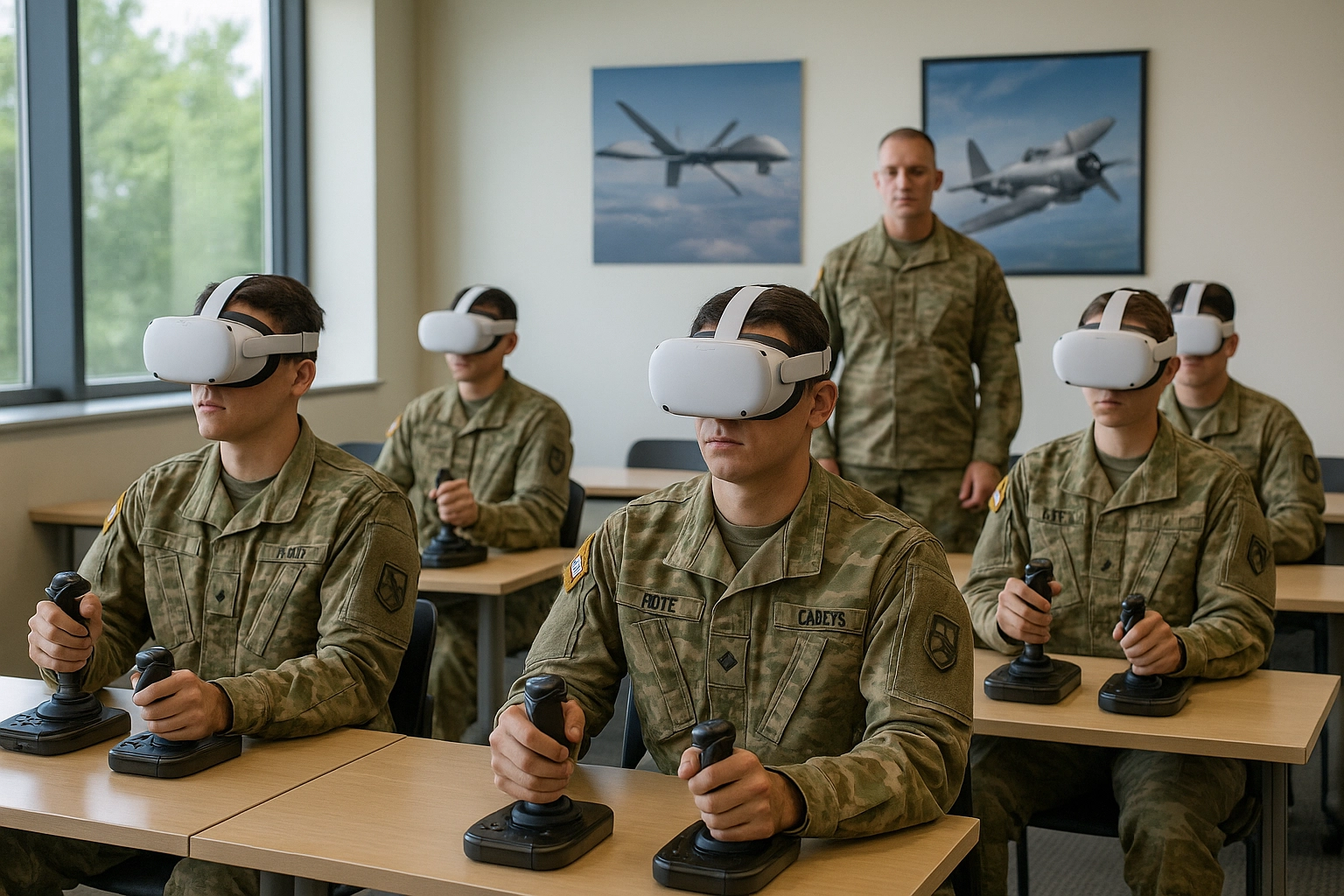
AI and VR integration in ROTC flight training enhances pilot education through immersive simulations, real-time performance analysis, and adaptive learning scenarios. The U.S. Air Force's Project Fusion demonstrates how virtual simulation equipment and 360-degree video headsets create realistic training experiences that complement traditional flight instruction methods.
Assessment and Planning Phase
Begin your integration journey with a comprehensive needs assessment that identifies specific training areas where AI and VR technologies deliver maximum value. Focus on applications that excel in virtual environments: cockpit procedures, emergency scenarios, and spatial awareness training.
The most effective implementations avoid forcing VR into every aspect of training. While virtual reality excels at procedure training and cockpit familiarization, it's not suitable for all educational activities. Establish clear learning objectives that align with your ROTC program's goals and complement existing training methods rather than replace them entirely.
Develop a strategic timeline that phases technology integration over multiple semesters. This approach allows instructors to adapt gradually while maintaining training quality and cadet progression standards.
Technology Infrastructure and Hardware Selection
Select VR hardware that balances immersion quality with budget constraints and maintenance requirements. The Royal Canadian Air Force has demonstrated that VR's portability and lower cost make it valuable for addressing training backlogs while providing more accessible training options for geographically dispersed programs.
Your AI system should analyze pilots' performance in real time, providing instant feedback and adaptive training scenarios. Look for platforms that can predict and analyze data from human interactions to generate program improvements automatically.
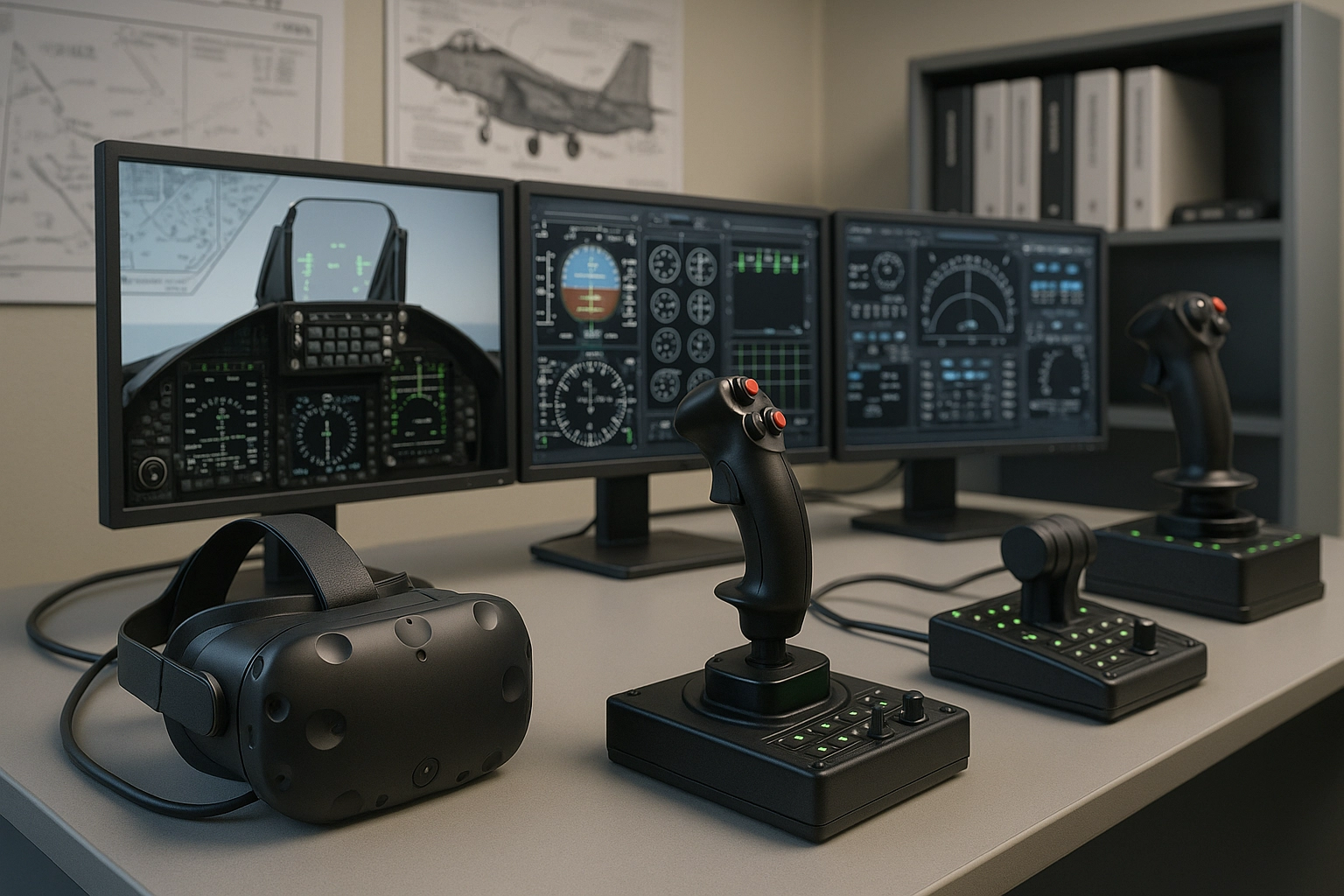
Consider these technical requirements:
- High-resolution displays that prevent motion sickness
- Tracking systems that accurately capture head and hand movements
- Audio systems that provide spatial awareness
- Computing power sufficient for complex flight simulations
- Network infrastructure supporting multiple simultaneous users
Curriculum Integration Strategy
Develop a phased implementation approach that gradually introduces VR and AI elements into existing coursework. Start with pre-simulator training sessions where cadets can practice procedures and develop muscle memory in a risk-free environment.
Systems Classes Enhancement: Make VR headsets available during systems classes to help cadets correlate theoretical systems knowledge with practical cockpit procedures. This bridges the gap between classroom learning and hands-on application.
Emergency Procedures Training: Implement VR scenarios for practicing critical procedures and memory items training. These sessions serve as excellent preparation for full simulator experiences, allowing cadets to encounter emergency situations multiple times before progressing to higher-stakes training.
Progressive Scenario Development: Create training scenarios that increase in complexity as cadets advance through the program. The AI component should adapt difficulty based on individual performance, creating personalized learning experiences that challenge each cadet appropriately.
Instructor Development and Training
Your instructors require comprehensive training on both technical aspects of VR/AI systems and pedagogical best practices for immersive learning environments. They must understand how to effectively guide students through virtual scenarios and interpret AI-generated performance data.
The AI system serves as an intelligent coach and data analyst within VR environments, but human instructors remain crucial for contextualizing feedback and providing mentorship. Train your staff to leverage technology while maintaining the human element essential for effective military leadership development.
Establish instructor certification programs that ensure consistent training quality across all VR/AI sessions. Regular refresher training keeps instructors current with evolving technology capabilities and best practices.
Implementation Best Practices
Start with Specific Applications: Focus initially on areas where VR provides clear advantages, such as captain upgrade training for learning procedures and familiarity with different seat operations. This targeted approach allows you to demonstrate value before expanding to other training areas.
Create Assessment Protocols: Use VR as an assessment tool when full simulators aren't necessary, allowing for more frequent evaluation of cadet progress. The AI system can track performance metrics and identify areas requiring additional attention.
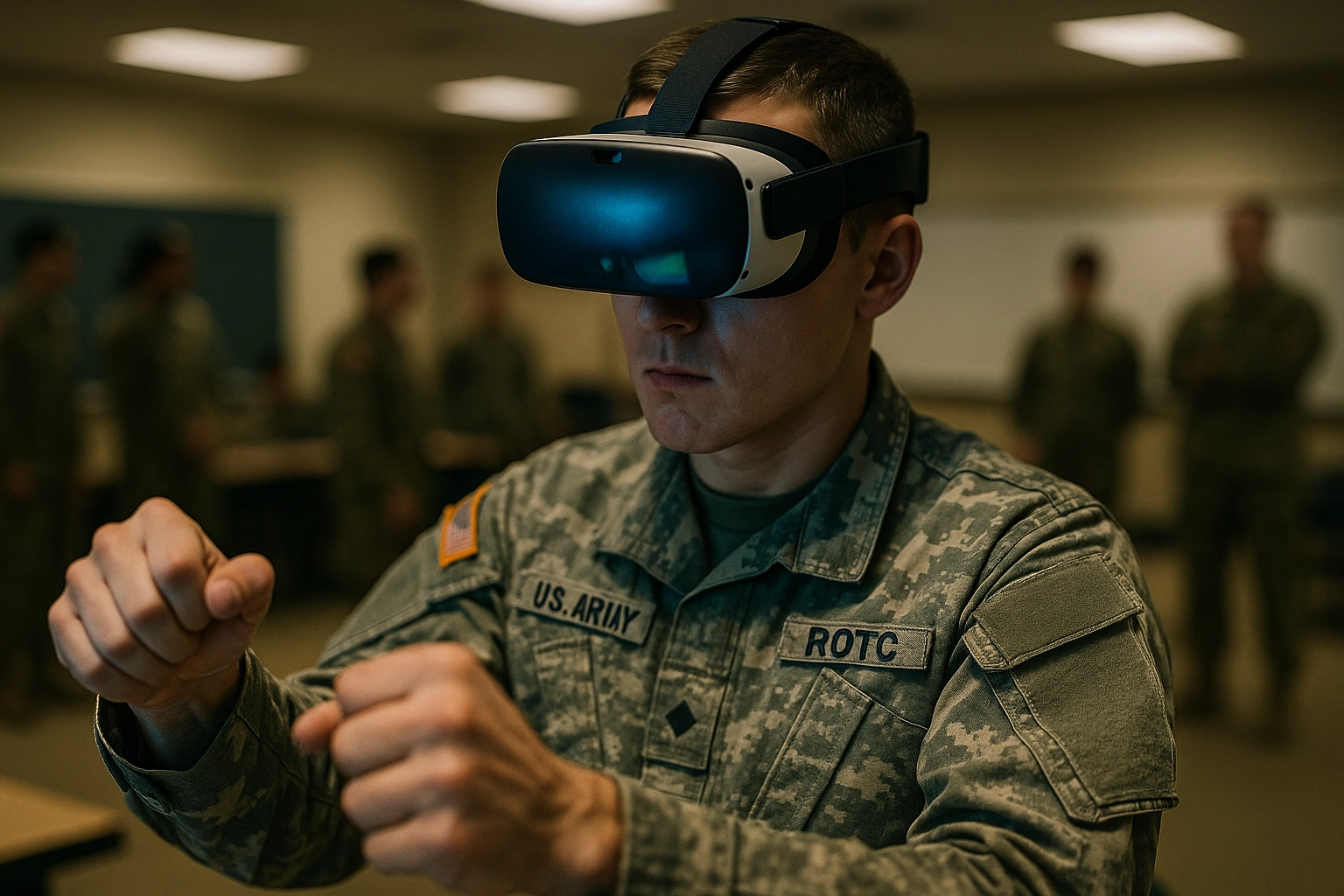
Establish Safety Standards: While VR eliminates many physical safety concerns associated with actual flight training, establish protocols for preventing motion sickness, eye strain, and other health considerations related to extended VR use.
What's the biggest challenge your ROTC program faces with current flight training methods?
Regulatory and Safety Considerations
Stay informed about evolving regulatory frameworks affecting VR-based training. In 2024, the European Union Aviation Safety Agency updated rules allowing VR devices to fill "full-flight simulator" roles in certain training scenarios, indicating growing regulatory acceptance.
However, AI-based training still requires careful oversight for data privacy, algorithm validation, and certification processes. Ensure your program meets all safety standards while leveraging the enhanced safety benefits that VR provides through risk-free simulation environments.
Collaborate with military aviation authorities to understand how VR training hours count toward required flight training minimums and certification requirements for various aircraft types.
Continuous Improvement and Analytics
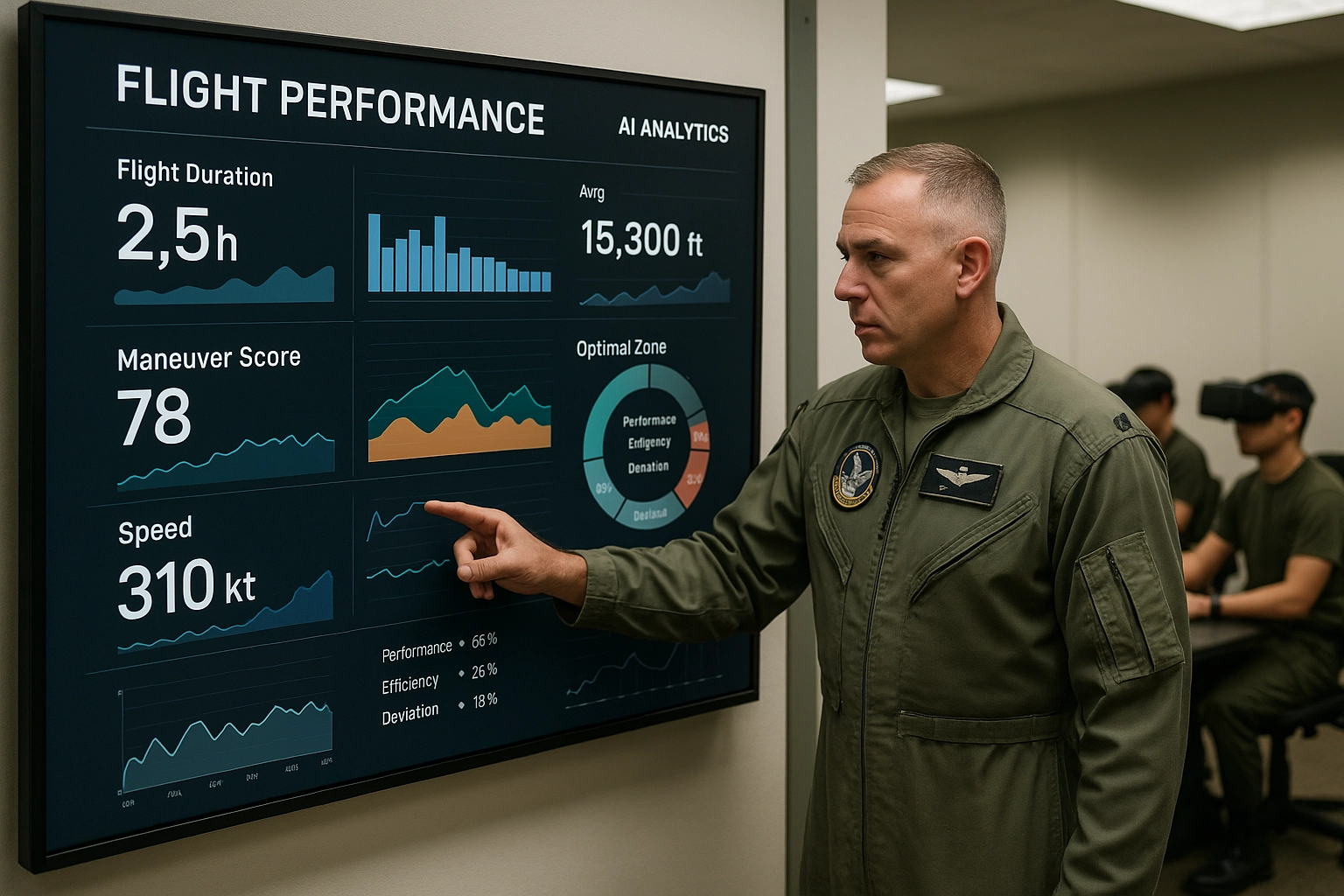
Leverage your AI system's ability to learn from each training session. As cadets interact with the software, the system can predict weather conditions, detect equipment malfunctions, track pilot biometrics, offer course corrections, and improve simulation graphics automatically.
Establish metrics to measure training effectiveness and use AI analytics to identify areas where individual cadets or the program as a whole can improve. This data-driven approach creates an evolving training environment that becomes more effective over time.
The interactive relationship between human instructors and AI systems allows for continuous optimization of training outcomes. Regular analysis of performance data helps identify successful training methods and areas requiring curriculum adjustments.
Cost-Benefit Analysis and ROI Measurement
Calculate the total cost of ownership for your VR/AI implementation, including hardware, software licenses, instructor training, and ongoing maintenance. Compare these costs against traditional training methods, considering factors such as:
- Reduced fuel costs for actual aircraft training flights
- Decreased aircraft maintenance and operational expenses
- Improved training efficiency leading to faster cadet progression
- Enhanced safety reducing potential accident-related costs
- Increased training capacity without additional aircraft purchases
Track key performance indicators such as cadet graduation rates, training time reduction, and performance improvements to demonstrate program value to university administration and military partners.
Future-Proofing Your Program
Design your VR/AI implementation with scalability in mind. Choose platforms that support regular updates and can integrate with emerging technologies such as haptic feedback systems, eye-tracking technology, and advanced AI algorithms.
Consider how your program can contribute to broader military training initiatives and potentially serve as a model for other universities. This forward-thinking approach positions your institution as a leader in military aviation education.
Which aspect of AI and VR integration would provide the most immediate benefit to your ROTC program?
By following this systematic approach, your ROTC program can successfully integrate AI and VR technologies to create a more engaging, effective, and scalable flight training experience. These innovations prepare cadets for the demands of modern aviation while demonstrating your university's commitment to cutting-edge military education.
Tags: #Motivation #Branding #Strategy #Marketing #AdvertisingAndMarketing #digitalmarketing #Innovation #Sports #ROTCTraining #VirtualReality #ArtificialIntelligence #FlightTraining #MilitaryEducation #UniversityPrograms
Want more insights like this? Subscribe at https://smallfootprintsimulator.com.
Questions or partnerships? Call our AI Receptionist at +1 (970) 703-0102.
Dan Kost, CEO , Small footprint simulator
If this helped you, please comment, subscribe, and share.
Share this article: