7 Ways Flight Simulators Are Solving the Military Pilot Shortage Crisis Right Now
Flight simulators are revolutionizing military pilot training and directly addressing the critical shortage of qualified aviators facing our armed forces. With 1,150 empty fighter pilot billets in 2024 alone, the military needs innovative solutions that can scale quickly while maintaining the highest training standards. Modern flight simulation technology offers cost-effective, safe, and efficient training alternatives that tackle multiple aspects of this complex challenge simultaneously.
1. Dramatic Cost Reduction Through Smart Resource Allocation
The financial impact of simulator-based training cannot be overstated. Operating costs for military aircraft range from less than $50 per hour for basic trainers to over $1,500 per hour for advanced combat aircraft. When simulator training replaces actual flight time in combat aircraft used for pilot training, military branches save approximately $390 to $1,400 per hour in operating costs.
These savings allow training programs to reallocate resources more strategically. Instead of burning through maintenance budgets on training flights, commanders can invest in additional simulator hours, more instructor positions, or enhanced training programs. The math is compelling: a single hour of F-35 flight time could fund 10-15 hours of high-fidelity simulator training.
Commercial aviation has already proven this model works. Airlines conduct 75 to 89 percent of their pilot transition training on simulators rather than actual aircraft, achieving both cost efficiency and training effectiveness. Military services are rapidly adopting similar approaches to maximize their training budgets.
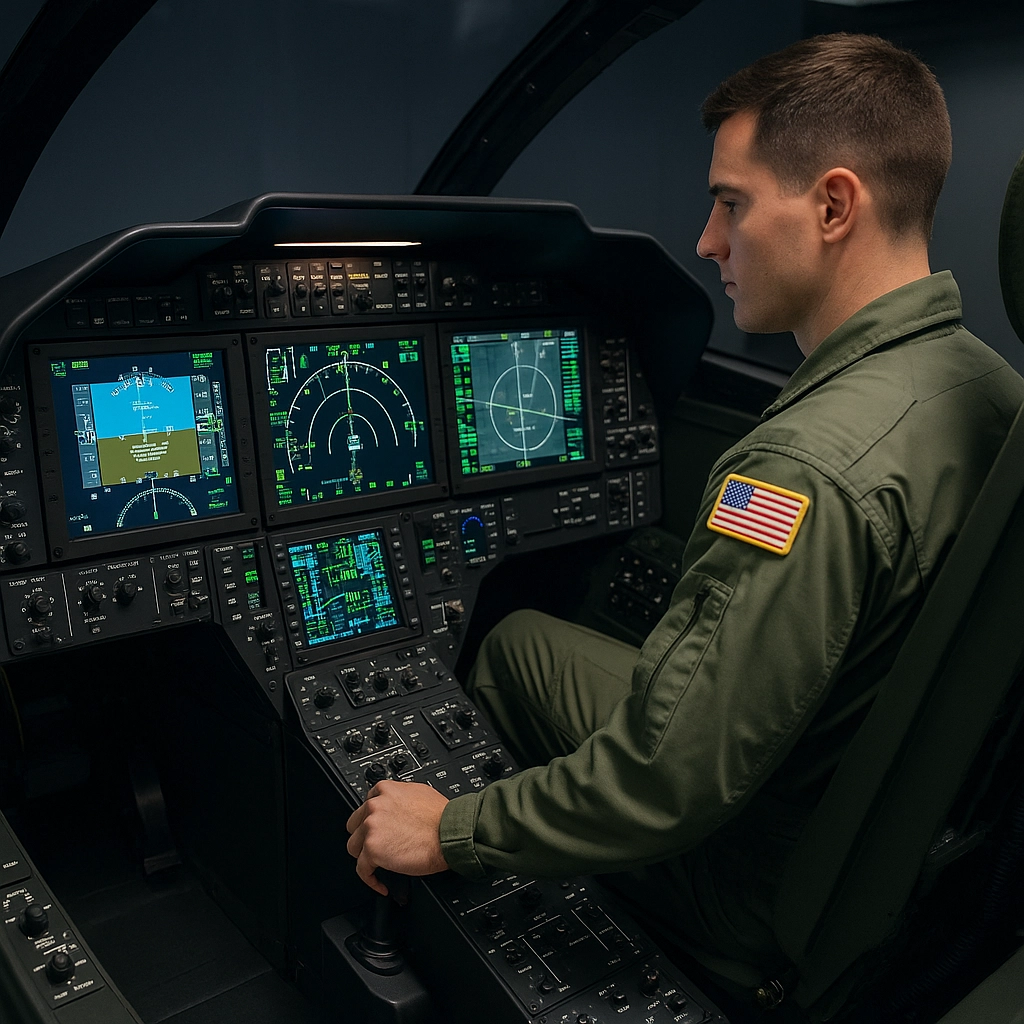
alt="Professional military pilot training in realistic flight simulator cockpit with multiple displays"
2. Enhanced Training Capacity and Operational Flexibility
Simulators eliminate the constraints that limit traditional flight training capacity. Weather delays, aircraft maintenance schedules, and airspace restrictions no longer dictate when and how pilots can train. A single simulator facility can operate continuously, accommodating multiple training sessions per day regardless of external conditions.
This increased capacity directly addresses the pilot shortage by enabling more students to complete training simultaneously. Training programs that previously graduated 50 pilots annually can potentially double or triple their output using simulator-enhanced curricula.
The flexibility extends beyond scheduling. Simulators can instantly replicate different aircraft types, weather conditions, and mission scenarios without the logistical complexity of coordinating multiple aircraft and support systems. This adaptability allows training programs to respond quickly to changing operational requirements and pilot specialization needs.
3. Improved Safety and Risk Mitigation
Training-related accidents represent a significant factor in the pilot shortage crisis. Every pilot lost during training compounds the shortage while requiring investigation resources and potentially grounding entire training fleets. Simulators eliminate these risks entirely during the critical learning phases.
Pilots can practice emergency procedures, combat maneuvers, and high-risk scenarios repeatedly without physical danger. This risk-free environment allows instructors to push training scenarios beyond what would be safely possible in actual aircraft, ultimately producing more capable and confident pilots.
The psychological benefits are equally important. New pilots can build confidence and muscle memory in simulators before transitioning to actual aircraft, reducing anxiety and improving performance during their first real flights.
4. Addressing Aircraft Availability and Maintenance Issues
The military's training aircraft fleet faces significant mechanical challenges. The T-38 Talon, a cornerstone of fighter pilot training, continues experiencing mechanical issues that disrupt training schedules and reduce available flight hours. These maintenance problems create bottlenecks in the pilot training pipeline.
Simulators provide an alternative training platform that operates independently of aircraft mechanical readiness. When physical aircraft are grounded for maintenance, training can continue uninterrupted using simulation systems. This continuity ensures that pilot candidates maintain momentum in their training progression rather than experiencing costly delays.
Modern simulators also allow maintenance training without risking actual aircraft systems. Pilots can practice emergency procedures for various mechanical failures without potentially damaging expensive military hardware.
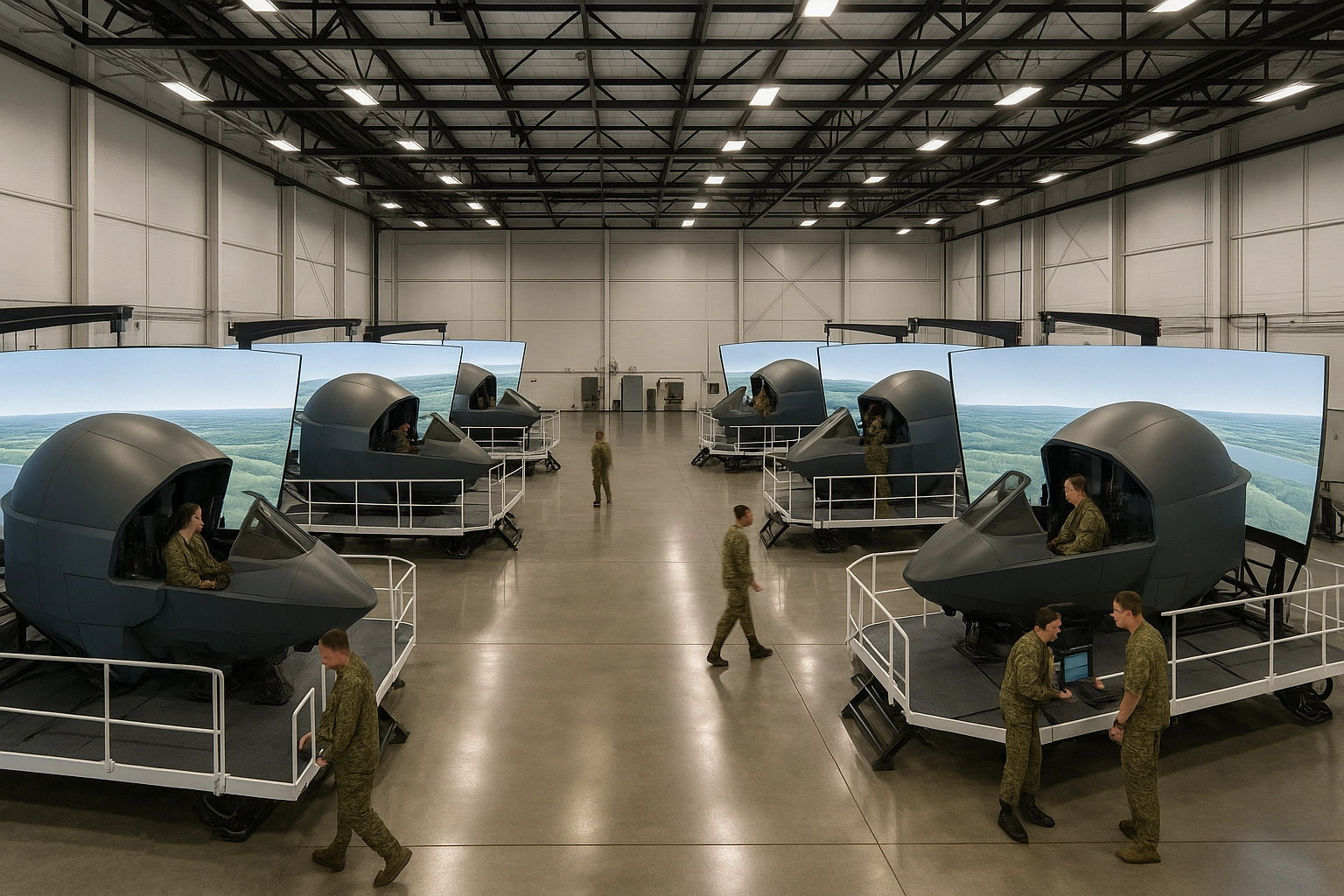
alt="Advanced military flight simulator facility showing multiple training stations with professional lighting"
5. Advanced Technology Integration and Combat Readiness
Senior Air Force leaders are advocating for more sophisticated, high-tech flight simulators that can replicate the complex flight operations required for modern combat missions. These advanced systems can duplicate increasingly realistic combat scenarios, electronic warfare environments, and multi-platform coordination exercises.
The technology integration extends to networking multiple simulators for large-scale training exercises. Pilots can practice coordinated missions with wingmen, ground controllers, and support aircraft all within the simulated environment. This capability provides training experiences that closely mirror actual mission requirements without the enormous costs and coordination challenges of live exercises.
Virtual reality and artificial intelligence enhancements are making simulators even more effective training tools. AI-powered threat simulation can adapt to individual pilot responses, providing personalized challenges that accelerate skill development.
6. Accelerated Pilot Proficiency Development
Simulators enable pilots to dedicate their actual flying time to practicing complex maneuvers rather than basic procedures. This focused approach dramatically improves training efficiency and helps pilots achieve higher proficiency levels in shorter timeframes.
The ability to repeat scenarios immediately provides learning opportunities impossible in actual flight training. If a pilot struggles with a particular maneuver, instructors can reset the simulation instantly for additional practice. This immediate feedback and repetition capability accelerates the learning curve significantly.
Data analytics from simulator training sessions provide detailed insights into pilot performance, allowing instructors to identify and address specific weaknesses before they become habits. This precision in training customization produces more capable pilots while reducing overall training time.
Visit our flying simulation products to explore professional-grade training solutions designed for military applications.
7. Strategic Force Multiplication and Scalability
Flight simulators support broader force development strategies by providing the training infrastructure necessary to absorb new pilots more effectively. As military branches work to grow their active component fighter forces, simulators offer the scalable training capacity required to handle increased pilot throughput.
The force multiplication effect extends beyond individual pilot training. Simulator facilities can train multiple crew positions simultaneously, including weapons systems officers, navigators, and mission specialists. This integrated approach ensures complete crew readiness while maximizing training efficiency.
Simulators also enable standardization across different bases and training commands. Digital training scenarios can be distributed instantly to multiple locations, ensuring consistent training standards regardless of geographic location or local instructor availability.
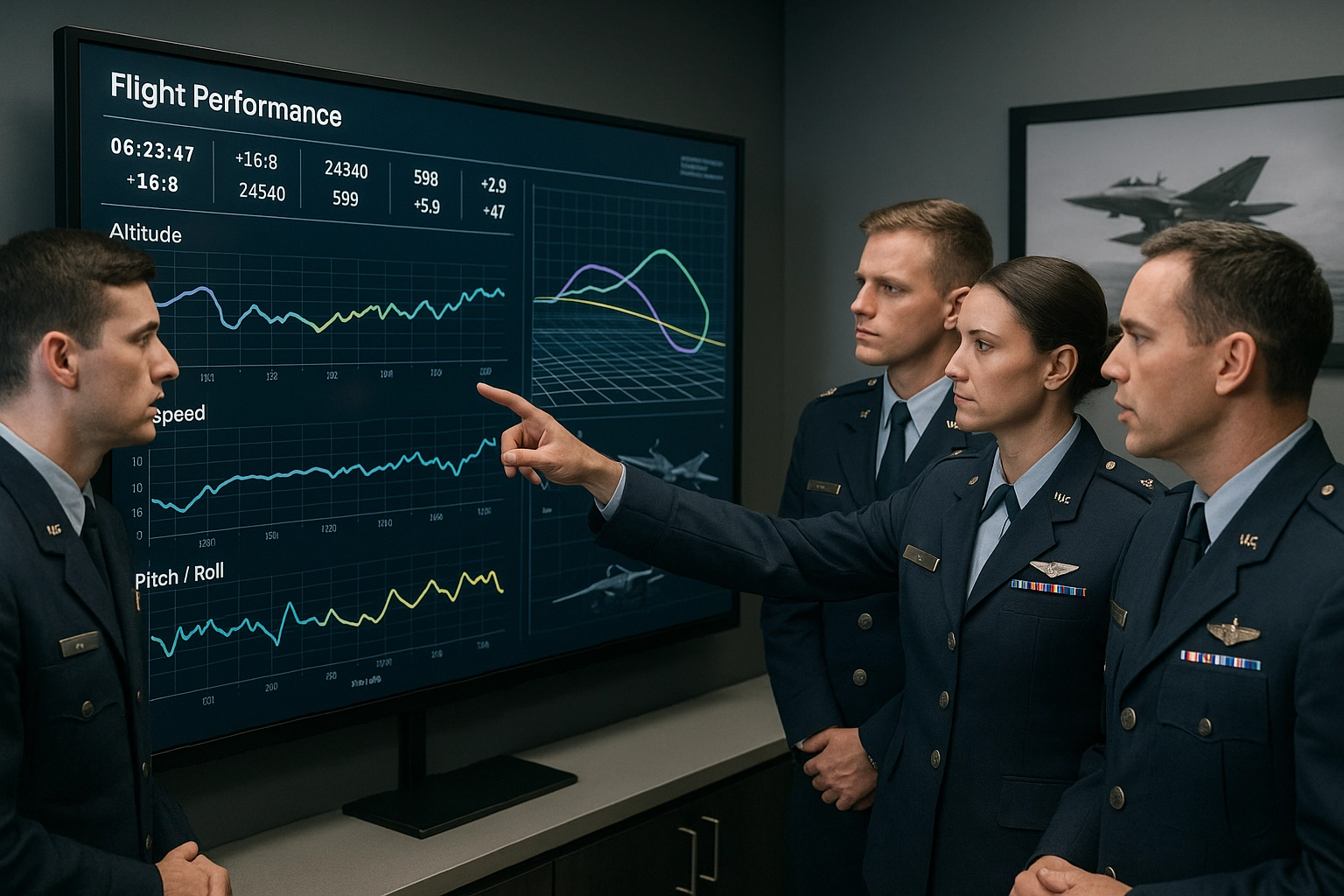
alt="Military training officers reviewing flight simulator performance data on professional display screens"
The Investment Challenge and Future Outlook
Despite proven benefits, military leadership has historically prioritized funding for aircraft and engines over simulator technology. However, this perspective is changing as senior leaders recognize that inadequate simulation capabilities can undermine overall mission readiness.
As one senior military leader noted, advanced simulation training capabilities are essential for mission success regardless of aircraft availability. This recognition is driving renewed emphasis on simulator investments as a critical component of solving the pilot shortage crisis.
The path forward requires coordinated investment in simulator technology, instructor training, and curriculum development. Organizations like Small Footprint Simulator are leading this transformation by providing compact, cost-effective training solutions that deliver full-scale training capability in reduced space requirements.
Which of these simulator benefits would have the biggest impact on your training program? Share your thoughts in the comments below and let us know what specific challenges you're facing in pilot training capacity.
Ready to Transform Your Training Program?
Want more insights like this? Subscribe at smallfootprintsimulator.com.
Questions or partnerships? Call our AI Receptionist at +1 (970) 703-0102.
Dan Kost, CEO , Small Footprint Simulator
If this helped you, please comment, subscribe, and share.
Share this article:
Tags: #Motivation #Branding #Strategy #Marketing #AdvertisingAndMarketing #digitalmarketing #Innovation #Sports #FlightSimulation #MilitaryTraining #PilotShortage #DefenseTraining #AviationTechnology #MilitaryReadiness