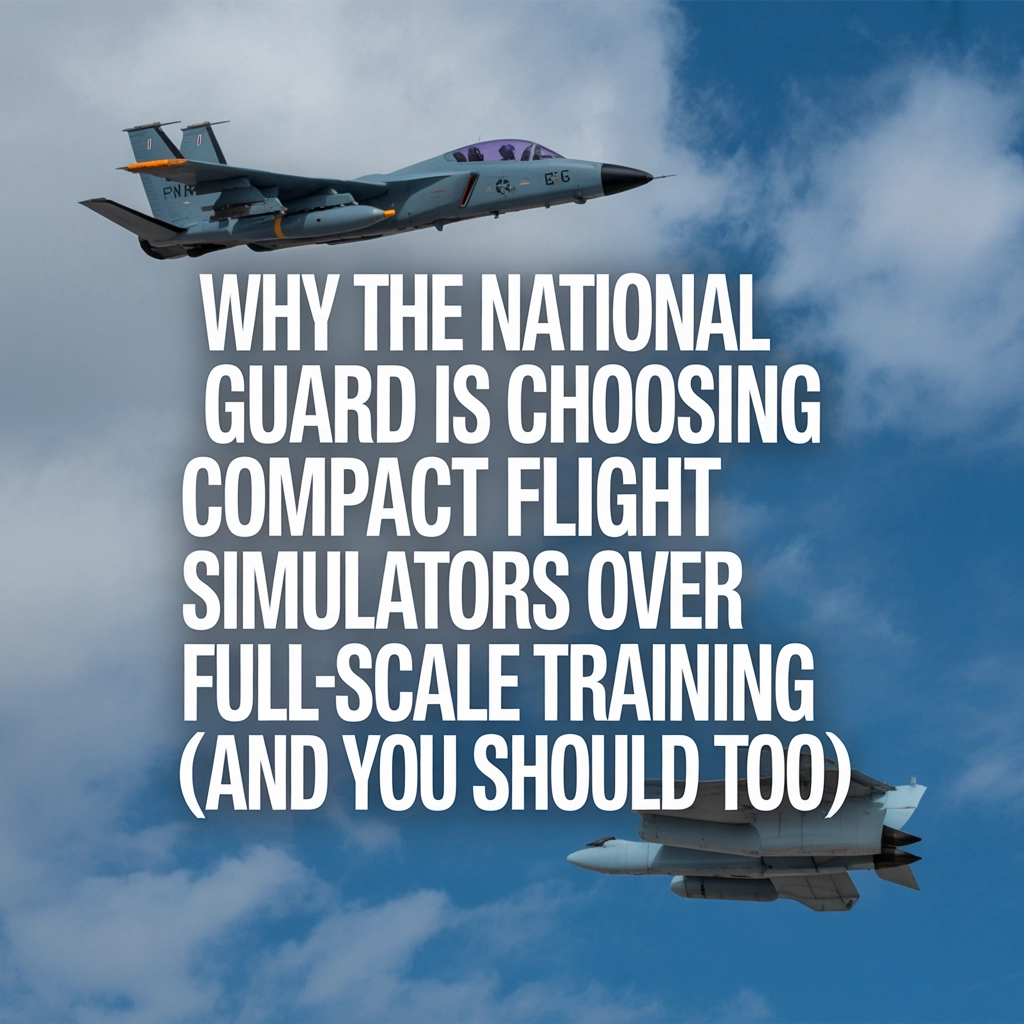
Why the National Guard Is Choosing Compact Flight Simulators Over Full-Scale Training (And You Should Too)
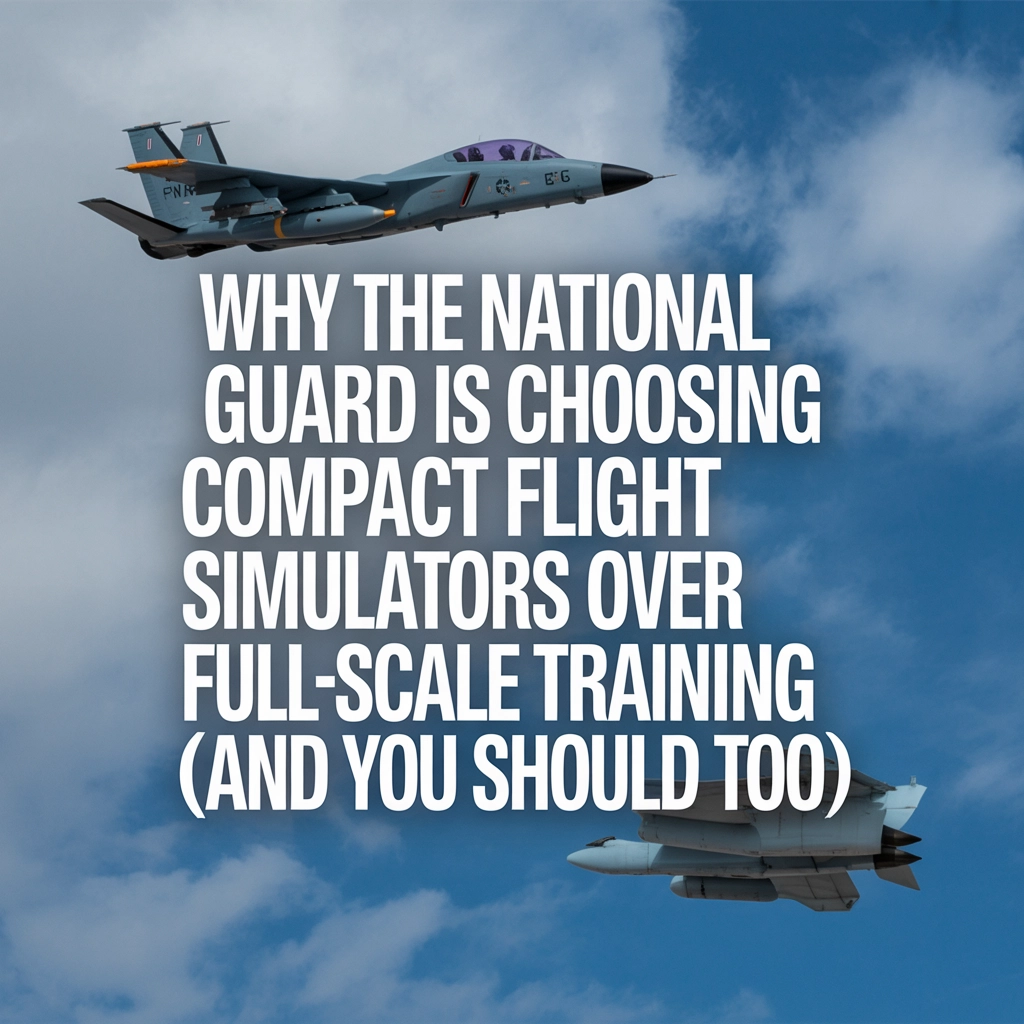
The National Guard is choosing compact flight simulators over full-scale training because they deliver 40-60% cost savings, enable risk-free emergency scenario practice, provide local accessibility that eliminates travel requirements, and offer customizable training experiences that can simulate multiple aircraft types. These benefits make compact simulators the strategic choice for effective, efficient pilot training programs.
Modern military aviation training faces unprecedented challenges. Budget constraints, safety requirements, and operational demands are forcing military leaders to rethink traditional approaches. The National Guard's strategic shift toward compact flight simulators represents more than just cost-cutting, it's a complete reimagining of how effective pilot training should work.
The Cost Revolution: Why Money Matters More Than Ever
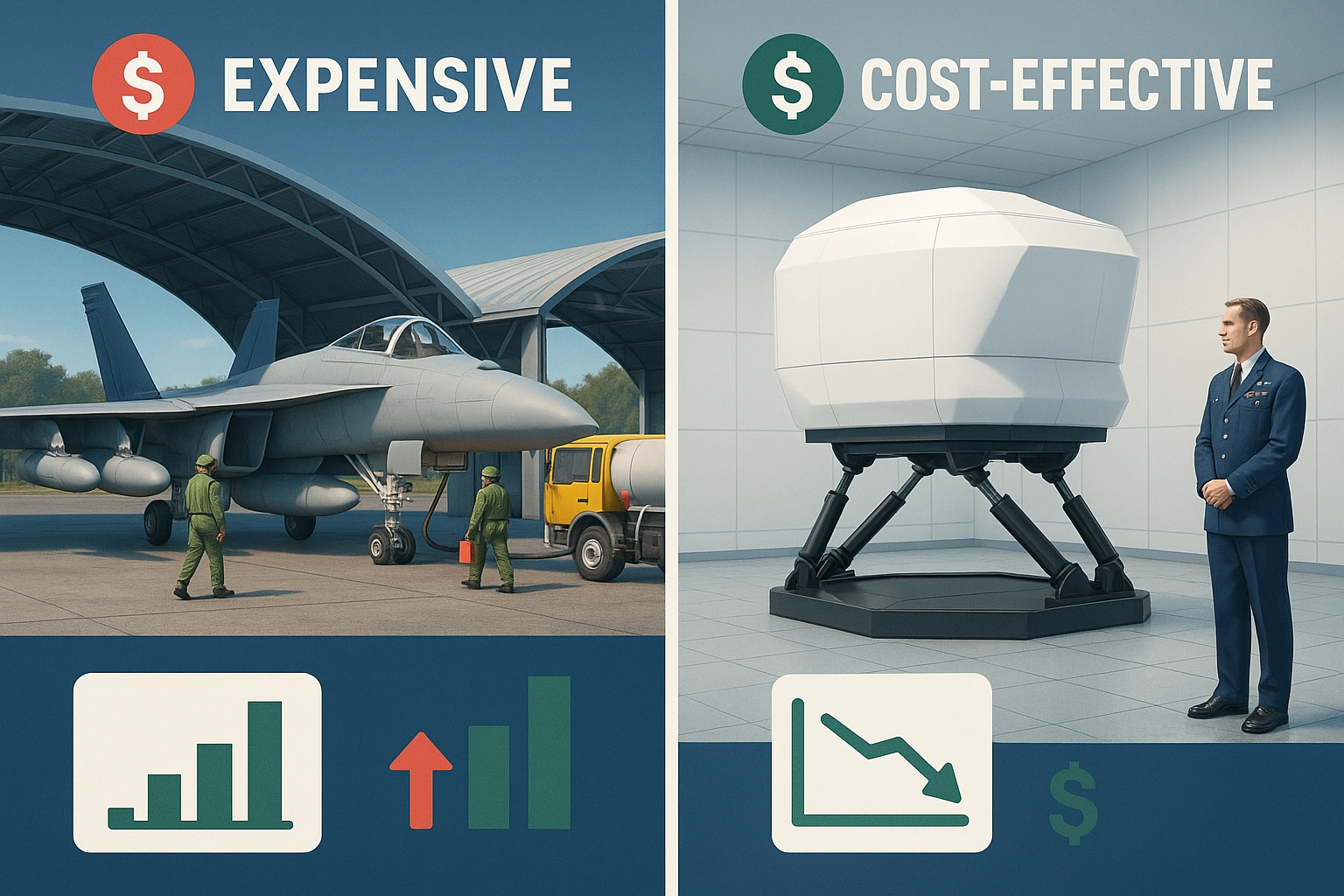
Traditional flight training burns through budgets faster than jet fuel. Every hour in the air means aircraft maintenance, fuel costs, instructor wages, and facility overhead. The National Guard discovered that compact flight simulators deliver the same training effectiveness at a fraction of the cost.
alt="National Guard training budget comparison chart showing simulator cost savings versus traditional flight training"
Consider the math. A single hour of actual flight time in a military aircraft can cost thousands of dollars when you factor in fuel, maintenance, and operational support. The same training hour in a high-fidelity simulator costs significantly less while providing identical skill development.
But cost savings go beyond the obvious. Compact simulators eliminate the logistical nightmare of scheduling aircraft, coordinating maintenance windows, and managing weather delays. Training can happen 24/7, regardless of conditions outside.
The versatility factor multiplies these savings. One compact simulator can replicate multiple aircraft types, eliminating the need for separate training programs for different platforms. For National Guard units operating diverse fleets, this consolidation represents massive resource optimization.
Safety First: Training Without the Risk
Emergency scenarios kill pilots. Not in simulators, in real aircraft when training goes wrong. The National Guard prioritized compact simulators because they enable comprehensive emergency training without putting lives at risk.
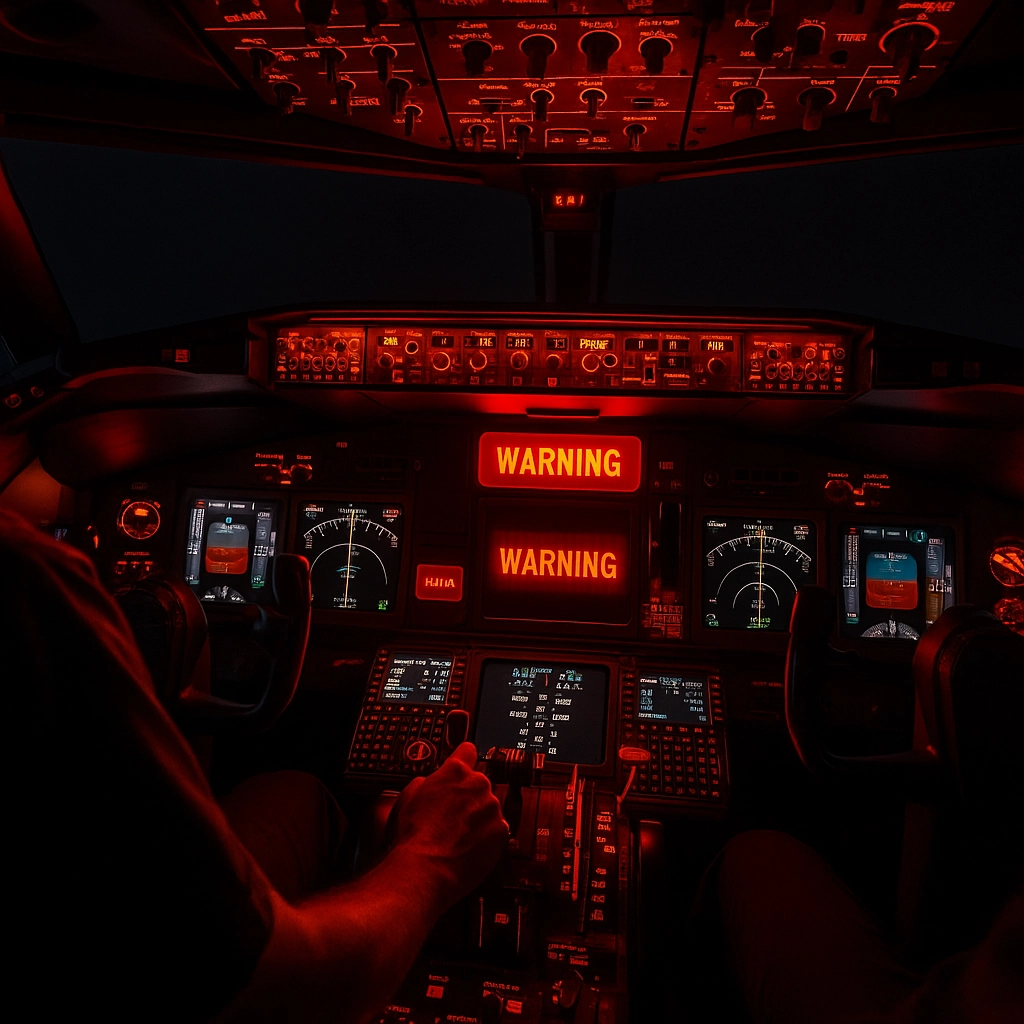
alt="Flight simulator emergency scenario training with multiple warning displays and realistic cockpit environment"
Modern compact simulators can recreate every conceivable emergency situation. Engine failures, electrical problems, hydraulic malfunctions, severe weather encounters, all can be practiced repeatedly until responses become instinctive. This repetitive emergency training builds muscle memory that saves lives in real situations.
The psychological benefits are equally important. Pilots can practice high-stress scenarios without the natural anxiety that comes with actual flight emergencies. This confidence-building aspect of simulator training produces calmer, more capable pilots who perform better under pressure.
Traditional flight training limits emergency practice because actual emergencies are dangerous to simulate. Simulators remove this constraint entirely, allowing comprehensive preparation for situations that would be impossible to practice safely in real aircraft.
Accessibility Revolution: Training Where You Need It
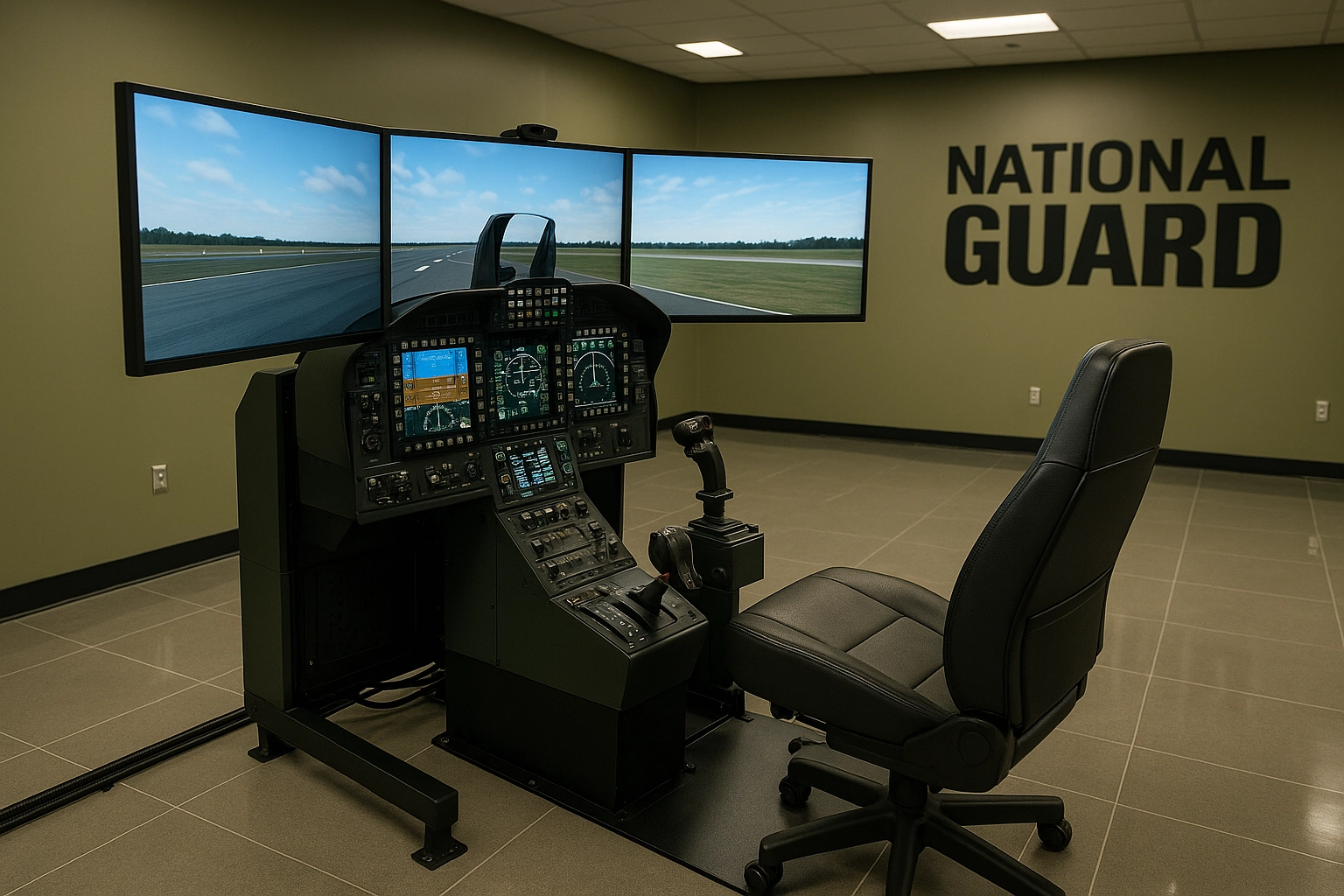
The National Guard's current infrastructure highlights a critical problem. With limited training devices spread across multiple locations, pilots often travel hundreds of miles for simulator access. This travel requirement creates scheduling bottlenecks and increases program costs.
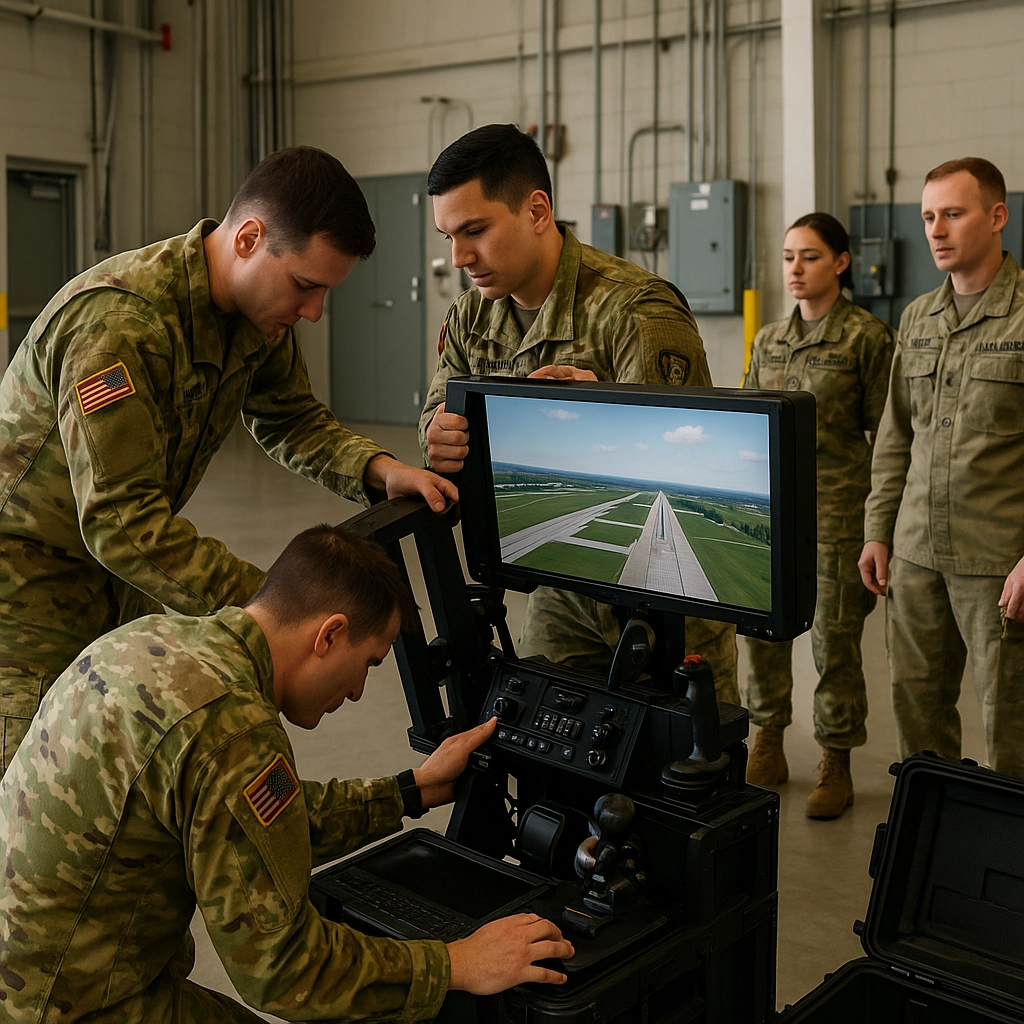
Compact simulators solve the accessibility problem through portability and quick setup capabilities. These systems can be deployed at any National Guard facility, bringing high-quality training directly to pilots instead of forcing pilots to travel to training.
alt="Portable compact flight simulator being set up in National Guard facility with technicians and training equipment"
The setup flexibility extends beyond permanent installations. Compact simulators can support field training exercises, deployment preparation, and remote location operations. This mobility makes them ideal for National Guard missions that require distributed training capabilities.
Local access means more training hours per pilot. When travel requirements disappear, training frequency increases dramatically. Pilots can maintain proficiency through regular simulator sessions instead of infrequent trips to distant training centers.
Training Effectiveness: Better Results, Faster Development
Modern compact simulators deliver training effectiveness that matches or exceeds traditional methods. High-fidelity graphics, realistic controls, and accurate flight dynamics create immersive experiences that build real piloting skills.
The customization capabilities of contemporary simulators enable training scenarios that would be impossible in actual aircraft. Combat situations, extreme weather conditions, system failures, and emergency procedures can all be programmed and repeated as needed.
alt="National Guard pilot in compact simulator with realistic cockpit displays and professional training environment"
Data collection represents another significant advantage. Simulators track every aspect of pilot performance, providing detailed analytics that help instructors identify areas for improvement. This data-driven approach to training optimization produces better pilots faster than traditional methods.
Self-paced learning becomes possible with simulator training. Pilots can repeat difficult procedures until mastery is achieved without the time pressure and resource constraints of actual flight operations. This personalized approach accommodates different learning styles and speeds.
The Strategic Advantage: Why Your Organization Needs This Approach
The benefits driving National Guard adoption apply across all aviation training contexts. Commercial flight schools, corporate aviation programs, and private training organizations face identical challenges: rising costs, safety requirements, and efficiency demands.
Cost reduction remains the primary driver. Organizations implementing compact simulator programs report training cost reductions of 40-60% compared to traditional flight-only approaches. These savings can be reinvested in additional training capacity or advanced equipment.
Safety improvements extend beyond pilot training. Ground crews, maintenance personnel, and support staff can all benefit from simulator-based training programs that eliminate the risks associated with live aircraft operations during training scenarios.
The scalability of compact simulators makes them ideal for growing organizations. Additional training capacity can be added quickly without the infrastructure requirements of traditional flight training programs. This flexibility supports rapid program expansion when demand increases.
Quality consistency represents another significant advantage. Simulator training delivers identical experiences for every pilot, eliminating the variability inherent in actual flight training where weather, aircraft condition, and instructor differences can affect training quality.
For more information about implementing compact flight simulator solutions, organizations should consider their specific training requirements and operational constraints.
Making the Transition: Implementation Strategies
Successful simulator program implementation requires careful planning and phased deployment. The National Guard's approach provides a proven model for organizations considering this transition.
Start with core training scenarios that deliver maximum impact. Basic flight procedures, emergency responses, and instrument training translate exceptionally well to simulator environments and provide immediate value.
Integration with existing training programs ensures smooth transitions. Simulators complement rather than replace all traditional training, creating blended programs that optimize both cost and effectiveness.
Instructor training becomes critical for program success. Pilots who excel in actual aircraft may need additional preparation to maximize simulator training effectiveness and student outcomes.
What training challenges is your organization facing that compact simulators might solve? Share your experiences and questions in the comments below.
Want more insights like this? Subscribe at smallfootprintsimulator.com.
Questions or partnerships? Call our AI Receptionist at +1 (970) 703-0102.
Dan Kost, CEO , Small footprint simulator
If this helped you, please comment, subscribe, and share.
Share this post:
Tags: #Motivation #Branding #Strategy #Marketing #AdvertisingAndMarketing #digitalmarketing #Innovation #Sports #FlightSimulators #MilitaryTraining #NationalGuard #AviationTraining #SimulatorTechnology #TrainingEfficiency