Quick answer: The National Association of Collegiate Esports (NACE) was founded in 2016 with 7 member schools and is growing quickly as more colleges launch varsity programs. That growth signals that esports is becoming a recognized campus activity, with real implications for recruitment, facilities and student engagement.
What is NACE?
NACE is a membership association for colleges and universities with varsity esports programs. It was founded in 2016 with 7 member schools. Since then, more institutions have joined each year as esports moves from student clubs to organized, school-supported teams.
For campus leaders, NACE's growth is a useful signal. When peer institutions formalize programs, the question shifts from "Should we have esports?" to "How should we build it?"
Why are colleges investing in esports?
- Recruitment: esports attracts students who may not have considered the school otherwise.
- Retention: team membership builds community and belonging.
- Career pathways: esports connects to broadcasting, event management, marketing and technology.
- Visibility: competitive programs give a school a presence in a fast-growing space.
What do campus esports programs need?
A program needs players, coaching and competition. It also needs equipment and space, which is often the hardest part. Dedicated esports arenas require renovation budgets and long timelines. Many schools start in shared rooms and grow from there.
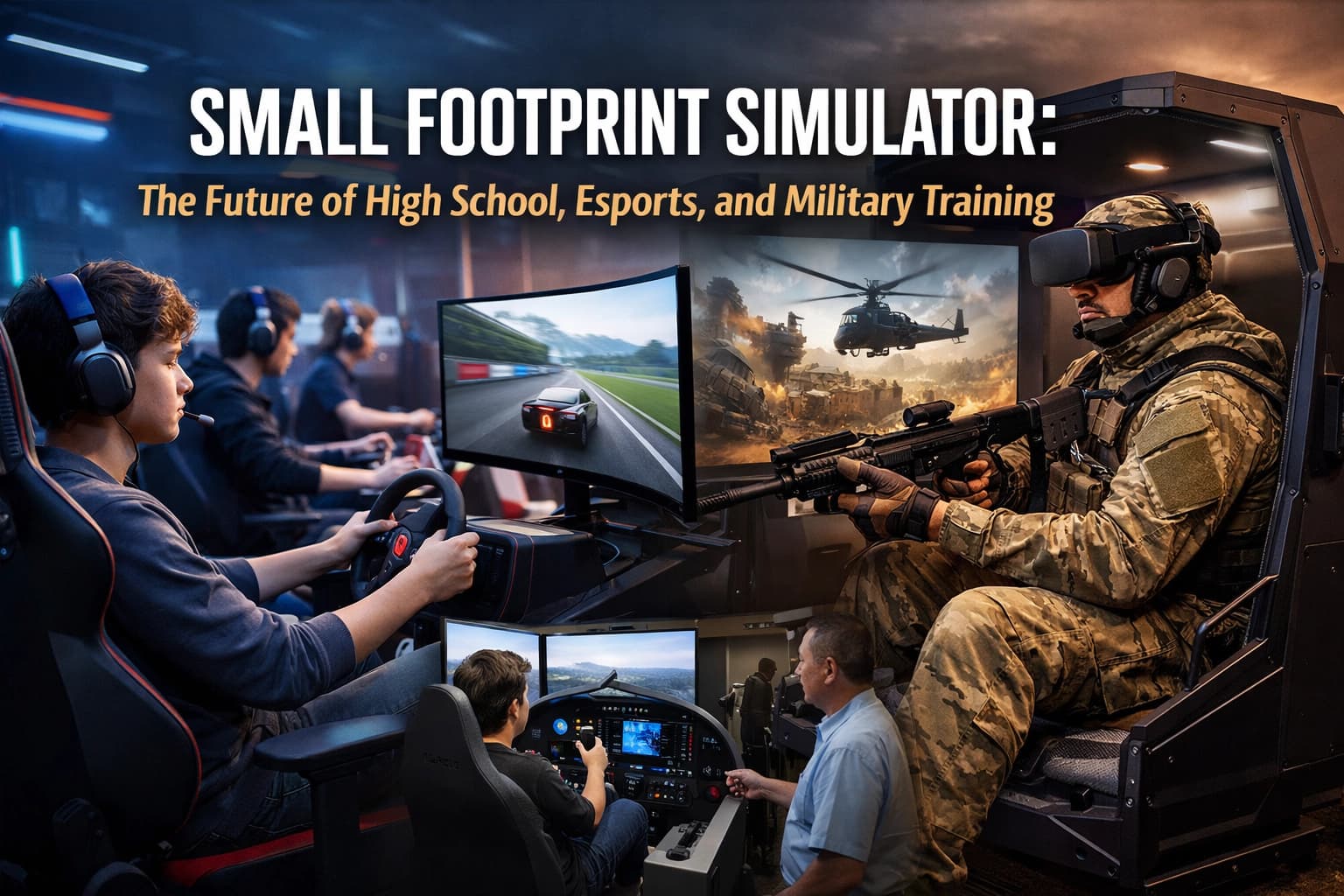
That is where equipment design matters. Gear that is compact, mobile and quick to set up lets a program begin now and expand later. It can also serve multiple purposes on campus, from esports practice to flight and driving simulation in academic programs.
How is USA Entertainment Ventures approaching collegiate esports?
We are developing a compact simulation pod that can host competitive play and professional training in the same frame. Our design goals include rolling through a standard door fully assembled, running on an ordinary wall outlet and supporting a wide range of controls, from flight sticks to racing wheels. We believe colleges will get more value from equipment that works for the esports team and the classroom.
Planning also means thinking about the student experience beyond competition. Programs that connect players with coursework in game design, broadcasting, data analysis and event operations give students skills that extend well past graduation. Equipment that supports both play and training helps make those connections practical.
Schools evaluating esports should start with clear goals: enrollment, engagement or career preparation. Those goals will shape how much space, equipment and staff the program needs in its first years.
Frequently asked questions
When was NACE founded?
NACE was founded in 2016 with 7 member schools.
Do colleges offer esports scholarships?
Yes. A growing number of schools offer esports scholarships as part of their varsity programs.
Can esports equipment serve academic programs too?
It can, if it is designed for it. Simulation-capable equipment can support esports, STEM and career programs on one platform.
Learn more about our mission, or contact us to discuss esports and simulation on your campus.