Quick answer: Simulation belongs in classrooms because it lets students practice real skills safely, repeatedly and with immediate feedback. The main barriers have been cost, space and complexity. A compact, easy-to-install simulator could make hands-on practice available to far more schools.
What is simulation-based learning?
Simulation-based learning places students in a realistic model of a task and lets them perform it. Instead of reading about how to land an aircraft or merge onto a highway, the student does it, in a setting where mistakes are learning moments rather than accidents.
Professionals have trained this way for decades. Pilots, military personnel and many operators of complex equipment rely on simulators. The question is why that advantage stops at the professional level.
Why does simulation work for students?
- Safe practice: students can attempt high-risk tasks with no physical danger.
- Repetition: a difficult moment can be replayed until the skill sticks.
- Immediate feedback: students see the result of each decision right away.
- Engagement: active, game-like practice holds attention.
- Career exposure: students can try aviation, driving and equipment roles before committing.
Why aren't simulators already in every school?
Most simulators were built for dedicated training centers. They are large, heavy and complex to install. Many require specialized electrical work, disassembly for delivery or a room built around them. For a school with shared classrooms and limited budgets, those requirements are often deal breakers.
The result is a gap. The schools that could benefit most from hands-on practice are the least able to host the equipment.
What would a classroom-ready simulator look like?
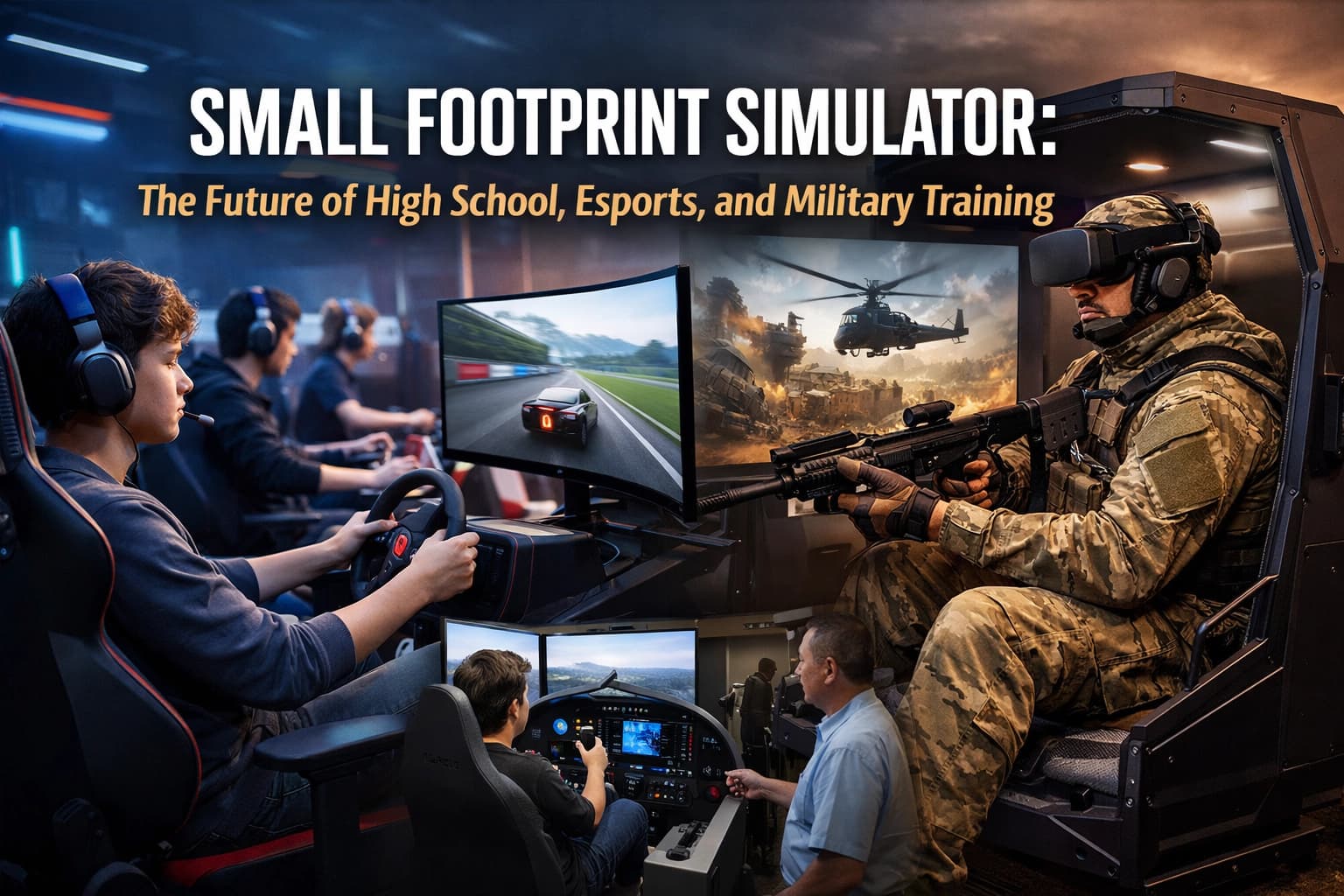
At USA Entertainment Ventures, we are designing toward a simple standard. A classroom simulator should arrive ready to use, fit through a normal door, plug into an ordinary outlet and be running within minutes. It should support several subjects, from flight and driving to esports, so one purchase serves many students.
We are early in development, and we are speaking with educators about what they need most.
The benefits extend beyond individual skills. Simulation encourages problem solving, decision making under pressure and reflection after each attempt. Teachers can use a single scenario to start a class discussion about choices, consequences and safety.
It also reaches students who struggle with traditional instruction. Learners who disengage from lectures often thrive when they can learn by doing, and a simulator turns abstract lessons into concrete experience.
Frequently asked questions
Which subjects benefit from simulation?
Driver education, aviation, career and technical education, STEM courses and esports programs are strong candidates.
Does simulation replace real-world training?
No. It prepares students and adds practice time, making real-world training safer and more productive.
When will your simulator be available?
Our simulator is in development. Contact us to share your classroom needs and follow our progress.
Read about USA Entertainment Ventures, or contact us to help shape a simulator built for your classroom.